The Hidden Harbors of Staten Island — October 15th

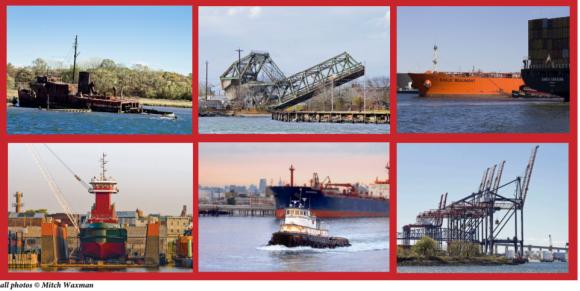
On Sunday, October 15, the Working Waterfront Committee is presenting “The Hidden Harbors of Staten Island,” a behind the scenes tour of a fascinating island led by Mitch Waxman of the Newtown Creek Alliance and Gordon Cooper, WHC Board Member and maritime consultant. From the WHC Hidden Harbor Tour press release:

Our route will carry us up the busy Kill Van Kull, with the oil terminals and factories of Bayonne on one side and the maritime industrial North Shore of Staten Island on the other. We will pass by floating dry docks, tugboat ports, and then under the Bayonne Bridge. The Shooters Island Bird Sanctuary, and the wooden ruins of a coaling station will be next. Our Captain will then guide us into the busy Arthur Kill waterway. We will pass Global Terminal (formerly NYCT) where the age of cargo box shipping began in 1956, and then we will see the newly rebuilt Goethals Bridge, a railroad lift bridge, and the Outerbridge Crossing.

Continue reading

2011 Japanese Tsunami Sent Invasive Species to the US, But Not Radioactive Fish or Mutant Wasps

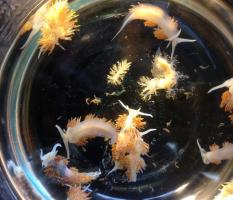
Marine sea slugs from a derelict Japanese vessel that washed ashore in Oregon. (John W. Chapman)

Since the Japanese tsunami of 2011 and the meltdown of the reactors at Fukushima, the Internet has been full of scary accounts of the Pacific Ocean becoming radioactive as well as stories of radioactive salmon and other fish. One widely repeated story said that Fukushima scientists have warned that fish in the Pacific Ocean will never again be safe for human consumption due to radioactive contamination. Another account claimed that radiation from the Fukushima disaster had caused 100% infant mortality among orca whales. There was even a story about mutated giant hornets from Fukushima killing people in Nebraska! 

All of these accounts are urban legends, fake news — call them what you will — they are not true. Which is not to say that the US environment has not been impacted by the 2011 tsunami.  A recent story in the Washinton Post describes how the tsunami brought a plethora of invasive species to the US West Coast, riding on the 5 million tons of debris swept into the ocean by the tsunami. Scientists have identified more than 280 species of organisms on the flotsam drifting ashore on the US West Coast.   

Continue reading

In Hurricane Ravaged Puerto Rico & the Virgin Islands, RCCL’s Adventure of the Seas to the Rescue

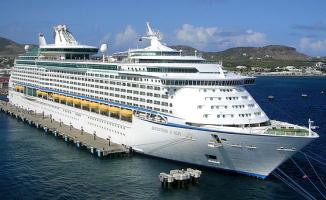
Royal Caribbean Cruise Line canceled their weekly scheduled cruise on the  MV Adventure of the Seas and instead sent the 3,114 passenger ship on a relief mission to carry supplies to those in need and to evacuate people from islands devastated by Hurricane Maria.  The ship called in San Juan, Puerto Rico on Wednesday and picked up 1,700 evacuees. The Adventure of the Seas arrived in St.Croix today to drop off supplies and pick up additional residents. It is expected to call in St. Thomas on Saturday to drop off supplies and pick up more evacuees before returning to Fort Lauderdale, arriving on October 3rd.  

This is the second round of relief voyages for RCCL. The Adventure of the Seas and the Majesty of the Seas both evacuated residents from St. Maartin and St. Thomas in the aftermath of Hurricane Irma, earlier in the month.

TBT Repost: Wanderer — the Slave Ship Flying a New York Yacht Club Burgee

For Throw-Back Thursday (TBT) here is a repost of an unlikely bit of history which we posted three years ago.  

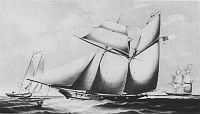
USS_Wanderer_(1857)The schooner yacht Wanderer was built in 1857 for Colonel John D. Johnson, a New Orleans sugar baron. At just over 100 feet long, she was luxurious, sleek and extremely fast, reportedly capable of sailing at 20 knots.  The Wanderer is not remembered, however, either for her beauty or her speed. She is remembered as the last slave ship to carry a human cargo to the shores of the United States.

In her only voyage as a slaver, she flew the New York Yacht Club burgee at her peak. That turned out to be a critical detail. The burgee and the complete implausibility of a luxury yacht whose owner wore the uniform of the New York Yacht Club, operating as a slave ship, allowed the ship to slip past the American and British anti-slavery patrol on the African coast.

Continue reading

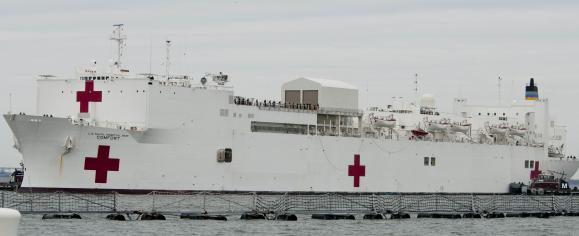
Is Puerto Rico Getting Enough Help? No Jones Act Waiver, Delays With Hospital Ship USNS Comfort

USNS Comfort, still In Norfolk, VA

The island of Puerto Rico was devastated by Hurricane Maria. The damage has been described as apocalyptic.  Most of the island is without power or water and tens of thousands are in shelters or are homeless. The healthcare system is overwhelmed by the destruction. Both fuel and food are in short supply. Help is on the way, but is it enough?

There is widespread criticism that not enough is being done. The 3.4 million American citizens in Puerto Rico are in great need of help and yet are getting less support than the victims of recent hurricanes in Texas and Florida. The Washington Post quotes Adm. Paul Zukunft, the Coast Guard commandant, that he understands why Puerto Rico’s residents feel forgotten. “They feel isolated, and they’re probably getting a sense of betrayal, of, well, ‘Where is the cavalry?’ ” Zukunft said.

Continue reading

US Coast Guard Sets Record for Drug Seizures at Sea Again

The United States Coast Guard has set a new record for cocaine seizures at sea for the second year in a row.  The Washington Post reports that the Coast Guard has seized more than 455,000 pounds of cocaine through Sept. 11 in the fiscal year that will end Oct. 1, breaking the record of 443,790 pounds set last year. About 85 percent of that comes from the eastern Pacific, service officials said. The Coast Guard also has detained at least 681 suspected smugglers in those operations, up from 585 last year and 503 in 2015.
While the Coast Guard has had record hauls of drugs seized on the high seas the past two years, that is not the case on land, according to data from Customs and Border Protection and Border Patrol reports the San Diego Union Tribune.  Annual reports from those agencies, which are the main law enforcement authorities on the border, show a steady decline over the past several years in the amounts of drugs seized.

Continue reading

The Hinckley Dasher — the Tesla of Luxury Yachts

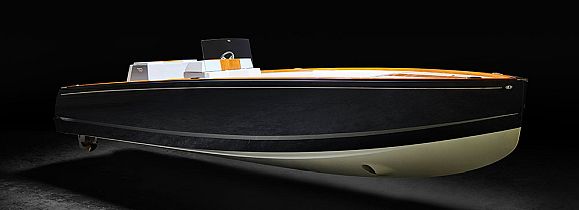
Hinckley Yachts claims to build “luxury yachts with innovative technology.” Their new 28’6″ fully electric runabout Dasher lives up to the boast.  Fortune magazine referred to it as the “Tesla of luxury yachts.” 

The new design, which uses carbon fiber to keep the boat light, features twin 80-horsepower Deep Blue 80i 1800 motors from German company Torqeedo, best known for its electric outboard motors. Two 40-kilowatt-hour BMW i3 lithium-ion batteries provide power to the motors.  

Continue reading

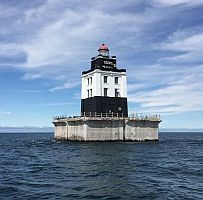
How Much Does a Cheap Lighthouse Really Cost?

There are always iconic objects that are almost irresistible in contemplation. They represent ideas which are far too easy to fall in love with. I really wanted to own an old style Volkswagen “bug” and then I owned one and understood my mistake. The old bug had a nearly indestructible engine but the body of the car had almost entirely rusted away. It had seemed like a good idea at the time. Likewise, I had friends who were in love with the idea of converting an almost free surplus lifeboat into an oceangoing yacht. That didn’t work out too well either.
Another iconic structure, perhaps the most iconic, is a lighthouse. Every year the government puts decommissioned lighthouses up for sale, often for very little money. Some lighthouses have sold for as little as $10,000! A few have been given away for free! How cool is that? A lighthouse for less than the cost of a new car! If only that was all the lighthouses really cost.

The New York Times recently published an article, “True Cost of Buying a Cheap Lighthouse? That Should Be Visible a Mile Away” which looks at the real cost of owning a “cheap lighthouse.”

Continue reading

Danish Lighthouse Tender Gerda III & the Rescue of Danish Jews

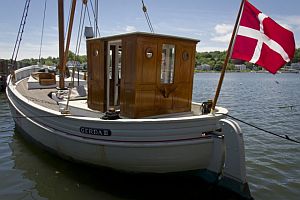
Among the fleet of ships and boats that make up the fleet at the Mystic Seaport Museum, the Danish lighthouse tender Gerda III, built in 1926, is a ruggedly attractive double-ender. Nevertheless, she could easily be overlooked. That would be a mistake. Gerda III played an important role in an audacious and risky rescue mission to save Jewish refugees from Denmark in 1943.
When it became apparent that the invading Germans intended to round up Danish Jews and send them to concentration camps, the Danes began a desperate effort to rescue the Jews. A flotilla of fishing and cargo vessels assembled to smuggle the refugees to safety in neutral Sweden. Gerda III was based in the fishing village of Gilleleje, only about 11 miles from Sweden. About one-fifth of the Danish Jews escaped to Sweden via Gilleleje. 

In October of 1943, Hanny Sondig, the 19-year-old daughter of the boat’s manager, took command of Gerda III with a crew of four and nightly smuggled groups of 10 to 15 Jewish refugees in the tiny hold of the lighthouse tender. In the two-week evacuation, over 300 refugees were smuggled aboard Gerda III. Ultimately, more than 7,000 Jews were smuggled out of Demark. Only 481 were captured by the Germans and sent to camps. 

Continue reading

US Navy Turns on AIS — Useful Tool, Band-aid, or Both?

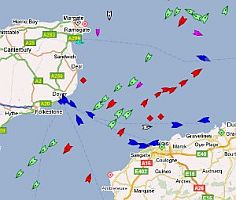
Following the recent collisions between US Navy destroyers and merchant ships, various internet sites posted the AIS tracks of the collisions. Well, they posted half the AIS tracks anyway.  The merchant ships used AIS while the Navy did not. While US Navy ships have AIS transponders onboard they do not transmit their positions nor apparently do Navy crews regularly consult the receivers showing the location and course of other ships. It was possible to track merchant ships’ courses but not the destroyers’. That now appears to be about to change. The Navy appears ready to finally switch their AIS transmitters on.
If the acronym AIS is not familiar, the Automatic Identification System (AIS) is an automatic tracking system which broadcasts a ship’s unique identification, position, course, and speed to other ships close by. AIS is required by the SOLAS (Safety of LIfe at Sea Convention) for almost all commercial ships. Use by military vessels is optional.

Continue reading

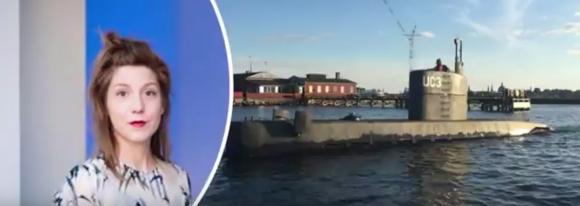
Wreck of German WWI Submarine Found Off Belgium

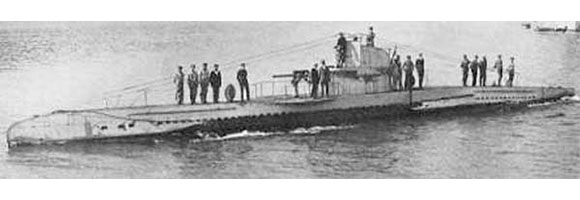
German type UBII Submarine

The almost intact wreck of a German submarine that sank during World War I has been located in the North Sea off Belgium, in 98 feet of water. The type UB-II submarine is said to be in good condition, with its hatches sealed, leading officials to believe that the bodies of the crew of up to 23 may still be inside the wreck. BBC quotes West Flanders Governor Carl Decaluwé saying, “The submarine is in such good condition that we reckon all the bodies are still on board.”

Continue reading

Kalmar Nyckel – A Tall Ship with a Broad Reach

Here is a short video about the Kalmar Nyckel, a replica of Dutch built pinnace purchased by Sweden in the mid-1600s. What makes the Kalmar Nyckel so fascinating for me is that while there are a goodly number of 18th century replicas sailing today, actively sailing 17th century replicas are rare.

If you are interested in rigging, the Kalmar Nyckel is a particular treat.  From her sprit-topsail that appears to balance precariously on the bow sprit, to the bonnets tied to the bottom of the sails, instead of reef points, there is much that would seem very strange even to an 18th or 19th century sailor. In addition to bunts and clewlines, the tall topsail and course are also furled by martinets, an intricate web of lines led to the long leeches. Add in the lateen mizzen and the whipstaff steering and the Kalmar Nyckel is an intriguing sailing vessel which is both familiar and an exotic relic of the past.

Kalmar Nyckel – A Tall Ship with a Broad Reach from Kalmar Nyckel Foundation on Vimeo.

Evening Grey Morning Red at JC Book Festival — Tales of our Cities

I will be participating in Jersey City’s 9th Annual Book Festival — Tales of Our Cities, in Van Vorst Park this Sunday. I will have a table with my books and books by other Old Salt Press authors starting at 11AM. I will be reading from my new novel, Evening Gray Morning Red at 3:30PM. I will also be giving away five Advance Reading Copies (ARCs) of the novel. Be sure to stop by and say hello if you are in the area. 

More Fallout from Pacific Casualties — Admiral and Captain Removed Prior to Senate Hearing

The fallout continues from the recent collisions with merchant ships in the Pacific involving the destroyers USS Fitgerald and the USS John McCain. The collisions resulted in the deaths of 17 US sailors. Earlier in the year, two guided missile cruisers based in the Pacific were also in casualties — one grounding and one collision — without loss of life.

The Navy has announced the removal of Rear Adm. Charles Williams, commander of Combined Task Force 70, the Navy’s largest operational battle force. Also being removed is his subordinate, Captain Jeffery Bennett, commodore of Destroyer Squadron 15, the squadron. The Navy describes the actions as being part of “ongoing accountability actions as part of the Navy investigations.”  Not directly related to the dismissals, the head of U.S. Naval Surface Forces Vice Adm. Tom Rowden put in a request last week to retire about two months early, several Navy officials confirmed to USNI News.  

Continue reading