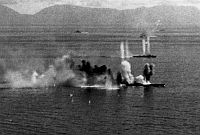
Musashi under attack 1944
After eight years of searching, a team lead by Microsoft founder and billionaire, Paul Allen, has discovered the wreck of the Japanese battleship Musashi, over 70 years after she was sunk in the Battle of Leyte Gulf. The wreck was located in the Sibuyan Sea off the Phillipines at a depth of around 1,000 metres (3,300 ft) using a remotely operated vehicle deployed from the yacht Octopus.
The battleship Musashi and her sistership Yamato were the heaviest and most powerfully armed battleships ever constructed. They were the last great battleships, arguably obsolete when they entered service in 1941 and 1942. Musashi was sunk by an estimated 19 torpedo and 17 bomb hits from American carrier aircraft on 24 October 1944, during the Battle of Leyete Gulf, which was the largest the naval battle of World War II, and by some standards the largest sea battle in history. Eighteen American aircraft were lost in the attack on the battleship. An estimated 1,000 Japanese sailors died when the ship capsized. Despite her 18″ guns and antiaircraft batteries, the battleship was helpless against the waves of attacking aircraft.
Microsoft co-founder Paul Allen’s team finds sunken WWII battleship
 As we mentioned in Part 1 of this post, two excellent nautical newsletters came out within the past few days —
  Two excellent nautical newsletters came out within the past few days —
  Over the last week, the internet has been overwhelmed by an
 Dr.
Dr. 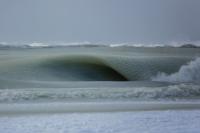

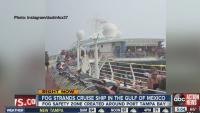 The
The 
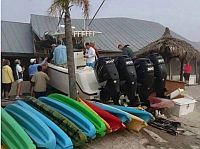 A quick quiz — you are the captain of a 39′ fast sports fishing boat with six passengers and a heavy sea fog has just set in. You either lack or are paying no attention to electronic navigational aides. What do you do? When Captain Matt Santiago was faced with this question yesterday, his answer was apparently to go faster. His See Vee sports fishing boat had four 300 HP outboard motors, or 1,200 HP in total, and
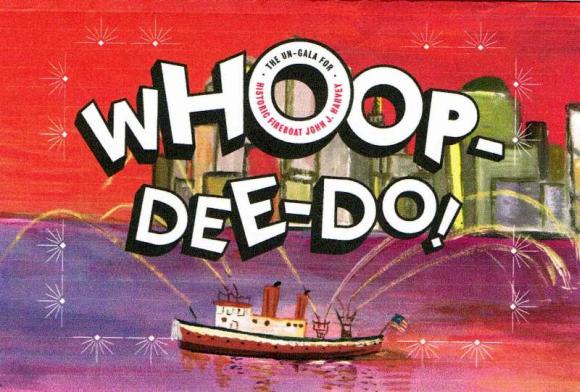 What’s a Fireboat Whoop-Dee-Do? I am not entirely sure but it sounds like fun. It is a fundraiser for the
  The US and Canadian Coast Guards have been working jointly to free the iconic Great Lakes bulk carrier,