Researchers at the University of Delaware have discovered the wreck of the 215 foot long, three masted sailing ship, W.R. Grace, which sank in a hurricane near Cape Henlopen in 1889 .

Mohammad Saaili Shibin
Yesterday, a federal judge in Virginia ordered Somali pirate Mohammad Saaili Shibin to serve 12 life sentences, 10 of which will run concurrently, while two are consecutive. Shibin was also ordered to pay $5.4 million in restitution.
Shibin, 50, has white hair and a neatly trimmed beard. He speaks several languages, including English. He has never ventured out to sea or participated in an attack on a merchant ship. His job was to negotiate. He had previously negotiated the ransom for the MV Marida Marguerite, a German ship hijacked by the pirates in 2010. When the American yacht Quest was hijacked in February 2011, Shibin researched online to determine how much the pirates would demand. Things went terribly wrong onboard the Quest, when the pirates killed the owners, Jean and Scott Adam and the crew Bob Riggle and Phyllis Macay. The attacking pirates were all captured or killed by Navy SEALS. Shibin was arrested in Somalia in April, 2011.
In April of this year Shibin was found guilty of all charges related to the hijacking and murders on the yacht Quest and the hijacking of the M/V Marida Marguerite. Shibin is thought to be the highest-ranking Somali pirate ever captured, with direct connections to those who provide financing for the pirate operations.
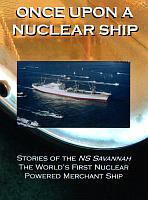 A new documentary by Thomas Michael Conner, “Once Upon a Nuclear Ship,” tells the story of the NS Savannah, the world’s first nuclear powered merchant ship. It is an interesting and worthy tale to tell. Without having seen the documentary, however, the documentary web site seems to suggest that it may be a film targeted at nuclear enthusiasts, at least based on the copy that describes the NS Savannah as “once the diamond in the crown of the US merchant fleet only to be kicked to the curb by dimwitted politicians and bureaucrats.” With all due respects, the reason that the Savannah, in particular, and nuclear merchant ships, in general, did not succeed is a bit more complicated than the actions or in-actions of “dimwitted politicians and bureaucrats.”
The film’s trailer also raises concerns. Early on, it states that, “among all those ships who sailed all those seas, there was only one merchant ship powered by atomic energy, the NS Savannah…” That simply isn’t true. The NS Savannah was not the only nuclear merchant ship . The NS Savannah was the first, put into service in 1962. There were, however, three other nuclear power merchant ships, the German Otto Hahn, the Japanese Mutsu and the Russian Sevmorput, which is still in service, more or less. The icebreaker Lenin, which began operation in 1959, claims the title as the first civilian ship with a nuclear power plant.
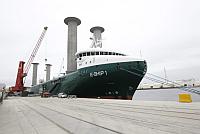
Photo: Lieven Van Assche
Two years ago, we posted about the delivery of the E-Ship 1, a ship built for Enercon, a German producer of wind turbines. The ship is intended to demonstrate energy saving technology as well as to deliver Enercon wind turbine assemblies to customers. The most unusual aspect of the ship are the four vertical columns, installed port and starboard on the bow and stern, which have been described as looking like four table legs sticking up into the air. These columns, 27 meters tall and 4 meters in diameter, are Flettner rotors. Making use of the Magnus effect, the rotors spin at high speeds and develop lift as the wind blows across them, creating, in essence, a sailing ship without sails.
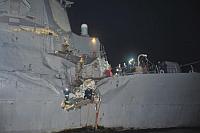
Photo: Defense Video and Image Distribution System
The Arleigh Burke-class guided missile destroyer, USS Porter collided with the Japanese owned, Panamanian flag, Very Large Crude Carrier (VLCC) M/V Otowasan in the the Strait of Hormuz at around 1 am Sunday, local time.
While few details are currently available, the report of the collision is disturbing. The M/V Otowasan is roughly 40 times larger than the destroyer by displacement and travels at less than half the destroyer’s speed. The USS Porter is fitted with an Aegis Combat Missile Defense System which, through complex radar tracking and telemetry, is designed to shoot down an incoming missile with another missile. It is one of the highest-tech systems in service in the US Navy. The ship is also fitted with conventional radar and navigational aids. Nevertheless, the destroyer failed to avoid colliding with a much larger and much slower oil tanker.
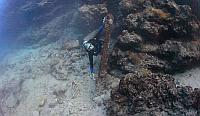 Divers may have found the wreck of a British privateer, Port-au-Prince, which was sunk off the island of Lifuka in the Ha’apai island group of Tonga, in December 1806. The ship was attacked by Tongan warriors on the orders of King Finau ‘Ulukalala II. The Tongans then salvaged iron and cannons from the ship before scuttling it. Legend has it that the ship was carrying considerable treasure when it was sunk in the form of copper, silver and gold, along with silver candlesticks, incense pans, crucifixes and chalices. The seizing of the Port-au-Prince was finally reported in Lloyd’s List in May 19, 1809. (Thanks to Michael Dunn for pointing it out.)
Tonga Shipwreck Could Be Legendary Pirate Ship Port-au-Prince
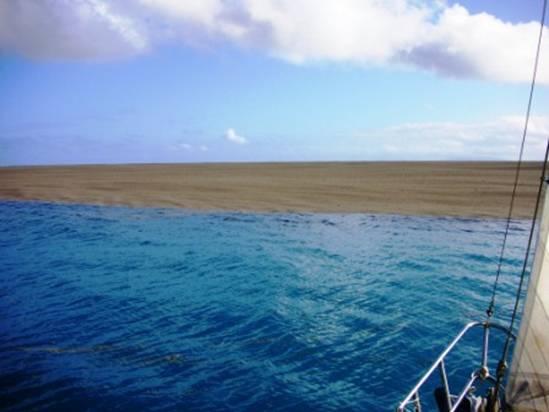


I received an e-mail a few weeks ago with some intriguing photos. (Click on any of the thumbnails above for a larger image.) The e-mail was titled “AMAZING SIGHT IN THE SOUTH PACIFIC, SPECTACULAR.” It was one of those e-mails that had been forwarded over and over again and had no sources and no date. It would be hard to say whether the photographs were current or from years ago. Nevertheless, they were fascinating. The photographs were taken from a yacht that had encountered what appeared to be a beach, stretching as far as the eye could see in the middle of the South Pacific. It turned out that it was floating pumice, the volcanic rock formed when lava erupts underwater.
Update: The photos above date from at least 2006. They apparently first appeared on the Fredrik and Crew on Maiken blog and were taken near Late Island, southwest of Vavaʻu in the kingdom of Tonga. (Thanks to Phil Leon for the heads up.)
In a similar event, the New Zealand Navy is now reporting a “pumice raft” covering an area of roughly 10,000 square miles, an area only slightly smaller than the nation of Belgium, floating in the Pacific about 1,000 miles off the New Zealand coast.
Continue reading
 France Telecom-Orange announced today that an unexplained fire had broken out on Thursday on the cable laying ship, the Chamarel, in the Atlantic Ocean off Namibia’s Skeleton Coast in the Atlantic Ocean. The crew of 56 abandoned ship after attempts at firefighting failed to control the blaze. The crew was picked up by a Namibian fishing vessel and taken to Walvis Bay. No injuries were reported. The ship was returning from making repai to the Sat3/WASC/Safe submarine cable which connects Portugal and Spain to nine West African countries, circles around the southern tip of Africa, and connects to India and Malaysia.
Tipped off by fisherman who caught amphorae in their nets, the wreck of a Roman merchant ship, believed to date from between the 1st century B.C. and the 2nd century, has been located in 230 feet of water near the Italian port city of Genoa. The ship is believed to have been carrying around 200 jars, known as amphorae. Tests on recovered amphorae suggest that they were carrying pickled fish, grain, wine and oil. Thanks to Phil Leon for passing along the news.
Roman ship found laden with cargo
Visit NBCNews.com for breaking news, world news, and news about the economy
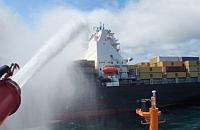 In the middle of July, we posted about a fire and explosion on the 6,750 TEU container ship MSC Flaminia in the mid-Atlantic, resulting in the death of one of the crew and one crew member missing and presumed dead. The surviving crew abandoned the ship. The fire was subsequently brought under control by three salvage tugs and brought under tow back toward Europe.
For the last week or so, however, the ship and her escorting tugs have been in a holding position 150 miles off Land’s End while the ship’s owners plead with UK, France, Belgium, the Netherlands, Spain and Portugal to allow the ship to enter their coastal waters.
“I think it’s ridiculous that a ship sailing under a German flag in this situation can’t get permission from countries in the European community,” said Helmut Ponath, head of NSB shipping company.
 Consider these two statements:
- Ships are the most energy efficient way to transport goods. They also have the smallest carbon footprint per ton of any means of transport.
- Ships are major polluters. One large container ship emits as much sulfur-oxide as fifty million cars.
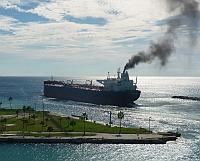
Which statement is true? They both are. Ships are incredibly energy efficient and most large ocean going ships burn very dirty fuel. The comparison between the container ship and the cars is more than a bit unfair as the most gasoline around the world now has a very low sulfur content. In terms of other pollutants ships are cleaner than cars or trucks. Ships emit far lower CO2 per ton carried than either truck or automobiles, for example. Nevertheless, residual fuel, often referred to as Bunker C, is very dirty and highly polluting.
Recently the Environmental Protection Agency( EPA) and the US ports of New York and Los Angeles have taken steps to limit the scope and impact of that pollution. Landmark EPA regulations to reduce air pollution from ships off the East and West coasts of North America went into effect on August 1st. Ships operating in US coastal waters will now be required to burn a lower sulfur fuel. Environmental groups are pleased, while some in the cruise industry are not. As reported by Scientific American:

Admiral Fischer – Ahead of his time, OMG!
Admiral of the Fleet John Arbuthnot “Jacky” Fisher, 1st Baron Fisher of Kilverstone, is considered by some to be the second most important figure in British naval history, after Lord Nelson. An innovator and a strategist who played a key role in taking the Royal Navy from wooden sailing ships to steel-hulled battlecruisers, submarines and the first aircraft carriers, Lord Fisher was apparently also linguistically ahead of his time. As reported by NineMSN:
Lord Fisher used the three-letter abbreviation in a 1917 letter to Winston Churchill in which he complained of negative newspaper headlines during World War I.
“I hear that a new order of Knighthood is on the tapis — O.M.G (Oh! My! God!) — Shower it on the Admiralty!!,” Lord Fisher wrote.
One presumes that the knighthood OMG would rank somewhere below the British rank of OM (Order of Merit) or the OBE (Order of the British Empire.)
The acronym OMG gained official recognition only last year when it entered the Oxford Dictionary. Thanks to Roger Moore for pointing out the story on the Facebook All Things Nautical Group.
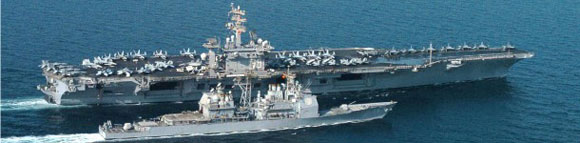 After being threatened the by Republican cost-cutters, the Senate defense appropriations subcommittee recently voted to continue funding the Navy’s “Great green Fleet” alternative energy program.
In 2009, Secretary of the Navy Ray Mabus announced the Navy’s “Great Green Fleet” initiative with the goals of decreasing the Navy’s consumption of energy, decreasing its reliance on foreign sources of oil, and significantly increasing its use of alternative energy. In July of this year, the Republican Congress attempted to sink the “Great Green Fleet,” declaring it wasteful and too expensive. Secretary Ray Mabus countered calling it vital for the military’s energy security. The experimental bio-fuels being developed in the program cost roughly $26 per gallon as compared to the less than $4 that the Navy often spends for fuel.
Continue reading
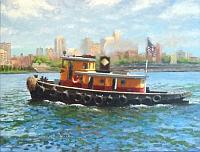
Frank Hanavan’s W.O. Decker
The bulkheads of the historic buoy tender Lilac will be graced by the maritime paintings of Christina Sun and Frank Hanavan from Tuesday, August 7 through August 31. The Lilac is berthed at Hudson River Park’s Pier 25 at West Street and N. Moore Street in lower Manhattan.
In 1606, the Duyfken, commanded by Willem Janszoon, became the first European vessel to sail to the continent of Australia. In 1999, in an act of “experimental archaeology,” a replica of of the Dutch ship was built in Freemantle, Australia. The goal was to build a replica that approached the remarkable sailing qualities of the original ship. The effort was a success. Now over 400 years after the original first sailed the shallow seas of the East Indies, the Duyfken replica continues its legacy. Recently three short videos were posted of the Duyfken sailing in the Arafura Sea between Australia and New Guinea. Thanks to Margaret Muir for pointing them out.
For more video of the Duyfken, click here and here. To learn more see : The Duyfken 1606 Replica Foundation