
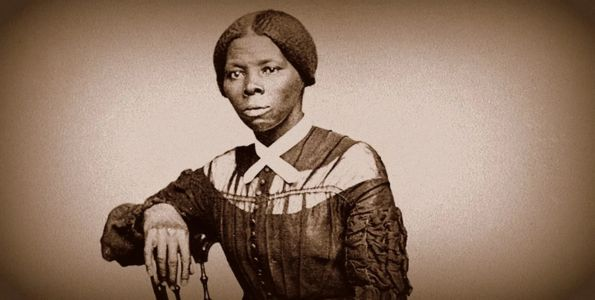
 Martin Luther King Jr. popularized the saying, “The arc of history is long, but it bends towards justice.” It would be pleasant to think that this is always the case. Given the recent political climate, the quote may be overly optimistic.
We recently posted Celebrating Black History Month — Part 1: Harriet Tubman & the Great Combahee Ferry Raid, the first of a two-part post which recounts a daring raid planned and helped lead a Union riverboat raid at Combahee Ferry in South Carolina in June, 1863, freeing over 720 slaves.
Before the war, Harriet Tubman was a legendary “conductor” on the Underground Railroad, nicknamed “Moses.” She rescued approximately 70 enslaved people after her own escape from slavery. She made the perilous journey at least 13 times, through treacherous swamps, shadows, and danger. She always escaped and later boasted, “I never ran my train off the track, and I never lost a passenger.”
As we noted in our previous post, the current Trump regime has launched a full-scale war on American history, specifically America’s non-white history. Through a series of executive orders, the current regime has attempted to rewrite our past, glorifying racists and traitors and erasing the horrors of slavery. Federal websites removed the positive accounts of resistance to oppression and tyranny by deleting the names of thousands of non-white heroes in American history, including Harriet Tubman, the Tuskegee Airmen, and the Navajo Code Talkers.
Widely known and well-respected in life, Tubman became an American icon in the years after her death. One biographer notes that though she had been relegated to the dustbin of history before the civil rights movement of the 1950s and 1960s, Tubman reemerged in the 1970s and 1980s as one of the most famous Americans in our history.
Today, she is memorialized in numerous parks, museums, and landmarks, in dozens of schools, streets, and highways in several states, and by many church groups, social organizations, and government agencies.
The Harriet Tubman Memorial Bridge on US17 spans the Combahee River between Beaufort and Colleton Counties in South Carolina at the site of a raid led by Harriet Tubman. It is part of the Tubman Byway, a self-guided, scenic driving tour that includes more than 30 sites, many of them with outdoor markers or interpretive signs that share the story of that place, and winds for 125 miles through Dorchester on Maryland’s Eastern Shore before ending in Philadelphia, where Tubman first found freedom.
In 1944, the United States Maritime Commission launched the SS Harriet Tubman, its first Liberty ship named for a black woman.
On November 11, 2024, Tubman was posthumously commissioned as a one-star general (Brigadier General) in the Maryland Army National Guard in recognition of her military service during the Civil War.
Despite Tubman’s popularity (or perhaps because of it), she has become a target of the Trump regime’s racism and its efforts to roll back DEI (diversity, equity, and inclusion) across the federal government. The removals were part of a larger effort to whitewash the uglier parts of our history and to minimize the positive aspects of minority history. Based on reports from late 2025 and early 2026, the Trump administration directed the National Park Service (NPS) and other federal agencies to remove content deemed to promote diversity, equity, and inclusion (DEI) or that was considered to “disparage” American history.
A large image of and a quote from Harriet Tubman were removed from a National Park Service webpage about the Underground Railroad, following numerous prominent changes to government websites under the Trump administration. In place of Tubman’s photograph are images of Postal Service stamps that highlight “Black/White cooperation” in the secret network and that feature Tubman among abolitionists of both races.
The new page does not mention slavery until the third paragraph, and cuts a reference to the Fugitive Slave Act of 1850 entirely. Previously, the article started with a description of enslaved people’s efforts to free themselves and the organization of the Underground Railroad after the Fugitive Slave Act. The article now starts with two paragraphs that emphasize the “American ideals of liberty and freedom.”
Within days, the removal of history on the Harriet Tubman and the Underground Railroad webpage was met with immediate outrage. The backlash against this rewriting of history resulted in the NPS replacing the original page information.
Trump attempted to erase Tubman’s future as well as her past. In 2023, the US Navy announced that the ninth ship of the John Lewis class of fleet replenishment oilers will be named USNS Harriet Tubman. This series of Navy oilers are all to be named after civil rights leaders.
In June, Secretary of Defense Pete Hegseth reportedly directed the Secretary of the Navy to review the potential renaming of the Harriet Tubman.
Following his appointment by President Donald Trump, Defense Secretary Hegseth pledged to reestablish a “warrior culture” across the military branches. He has mainly pursued this through the elimination of diversity, equity, and inclusion programs and content.
Linda Harris, Director of Events and Programming at the Harriet Tubman Museum and Educational Center, said Tubman more than fits into the warrior category.
“Our secretary is dead wrong, he’s got some really wrong ways of thinking about women in our country and that’s sad to see, I’m saddened for him,” said Harris. “She was indeed a warrior, she was a commander and she should be applauded for that.”
Pete Hegseth is a former Fox News host with a history of alcohol abuse and public drunkenness. Hegseth has also been accused of sexual assault of a co-worker, an allegation that he settled with a $50,000 payment.
Hegseth is also a Christian white nationalist with tattoos associated with the white supremacist and neo-Nazi movements. He left the National Guard after he was barred in 2021 from serving in support of Joe Biden’s inauguration as a National Guard member after an intelligence officer posted concerns over what the officer described as “white supremacist symbols” in Hegseth’s tattoos. D.C. National Guard’s head of physical security, Master Sgt. DeRicko Gaither, warned commanding general William J. Walker that the tattoos suggested Hegseth could be an “insider threat.”
Hegseth has expressed his hostility to women in the military. He spent his first months in office firing numerous senior women leaders—purges that have been matched by his dismissals of Black senior officers and other leaders of color.
So far, Hegseth has ordered the renaming of the second oiler in the series, which had been named after gay rights activist and Navy veteran Harvey Milk. He has not yet recommended the renaming of the USNS Harriet Tubman, which is still under construction.
Previous administrations planned to add a portrait of Tubman to the front of the twenty-dollar bill, moving the portrait of President Andrew Jackson to the back of the bill. In 2020, Trump blocked the plan. True to form, Trump is reported to have said, “You want me to put that face on the $20 bill?” Trump also expressed admiration for President Andrew Jackson, who was a slave owner, and had a portrait of him put in the Oval Office.
Just as Harriet Tubman fought relentlessly for her entire life against oppression and white supremacy, the battles for freedom are still ongoing. The tiny woman who escaped from the slave catchers is still being pursued by the racists who still hold sway over this country. It is up to those who honor Tubman’s memory to ensure that her legacy is not erased, to see that the arc of history ultimately bends towards justice.
Pingback: Celebrating Black History Month — Part 1: Harriet Tubman & the Great Combahee Ferry Raid
Thanks for posting.