
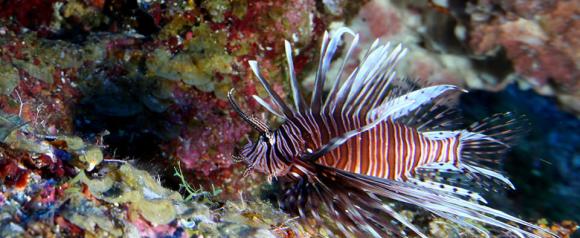
 Sometime in the 1990s, two different species of lionfish made it into the waters of the Atlantic off Florida. Native to the Indo-Pacific, the venomous, predatory fish spread rapidly, decimating local reef fish in the Atlantic, the Gulf of Mexico, and the Caribbean. Lacking local predators to stop its spreading, the lionfish have been described as “one of the most aggressively invasive species on the planet“. So far, the most effective means of slowing the spread of the fish is for divers to spear them, a relatively slow and challenging approach.
I recently came across a video from 2015, showing a grouper eating a lionfish. Groupers and sharks are natural predators for the lionfish in the Pacific, but the Atlantic and Caribbean groupers have been slow to adapt to considering the new invader as a food source. Are local groupers and other predators developing a taste for lionfish? About the video: Continue reading

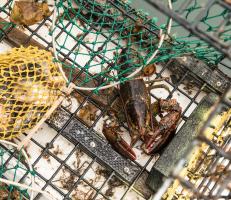



 A group of “
 Today, the New York Times featured an article titled — “

 Captain Reinhard Hardegen
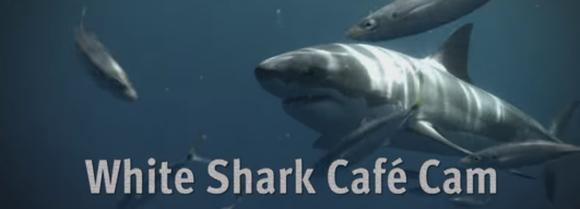 For many years, scientists had thought that great white sharks traveled north and south along the Pacific coast of America, feeding in waters close to shore. Then researchers at Stanford University’s Hopkins Marine Station began tagging white sharks with satellite tracking tags. Rather than staying along the coast, great whites were traveling a thousand miles out into the Pacific in the winter and spring and congregating in an area which the researchers nicknamed the “
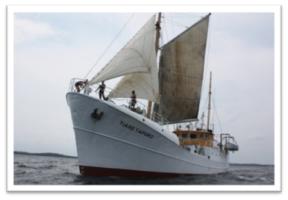 Ever dream of sailing the Pacific on an inter-island trading ship? Well, the Auxiliary-Sail Trading Vessel Tiare Taporo, based in the Cook Islands is looking for crew. This sounds like a fascinating opportunity for the right individuals. From a notice by