
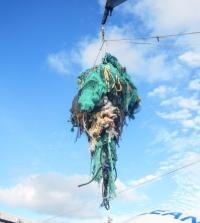
Ghost nets — Photo: The Ocean Cleanup
A new study published in Nature suggests that the Great Pacific Garbage Patch is growing “exponentially” and now spans roughly 617,763 square miles (1.6 million square km), or about three times the size of France. The garbage patch is an accumulation of plastic and floating debris brought together by a gyre, a circular current, in the Pacific between California and Hawaii. It is thought to be the largest ocean garbage patch on earth. According to the new study, the trash is made up of 1.8 trillion pieces of plastic weighing nearly 90,000 tons. This new estimate is between four and sixteen times greater than had previously been predicted.
One aspect of the study that appears to have drawn less attention than the size and the extent of the patch is what it is made of. The study determined that at least 46% of the floating debris are fishing nets and related cordage. These “ghost nets” are a major threat to fish populations around the world and pose an entirely different set of challenges in any potential cleanup.
 Team Sun Hung Kai/Scallywag
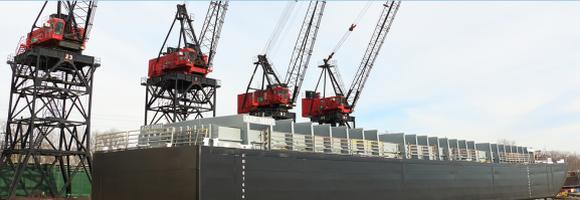 Shipbuilding is a capital intensive and highly competitive business. Remarkably, Jeffboat of Jeffersonville, Indiana, lasted for 184 years. Now, the longest continually operated inland shipyard in the U.S., is
 On Sunday, the
 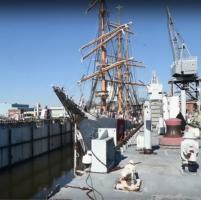 Here is a time-lapse video of the U.S. Coast Guard’s 81-year-old Barque
 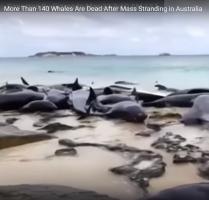 More than 150 short-finned pilot whales were found stranded early Friday in Hamelin Bay, Western Australia. Despite the best effort of more than 100 volunteer rescuers, only 6 survived to be returned to the sea. Hamelin Bay is located about 192 miles southwest of Perth.
 For about 30 minutes early Saturday morning the
 Yesterday
  The latest news from Paul Allen’s research vessel Petrel: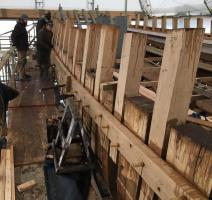
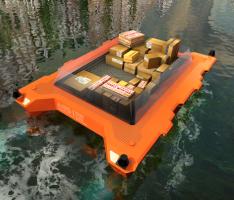 Autonomous barges may soon be carrying cargo and passengers on Amsterdam’s 100 km of canals. Referred to as
 The
The