In 2007, Eric Jay Dolin wrote Leviathan, The History of Whaling In America, a wonderful book that follows the American whale fisheries from shore whaling, to the fleets of whale ships that sailed in every ocean, to the industry’s decline in the nineteenth century. Highly recommended.
Dolan’s new book, Fur, Fortune, and Empire: The Epic History of the Fur Trade in America, which will be released in July, also sounds fascinating. While not exclusively nautical, it does cover Hudson’s voyage to America as well as the sea otter trade in the Pacific Northwest, and its role in the China trade. A short video about the book:
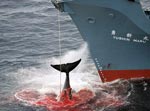 There is an interesting conflict going on over the
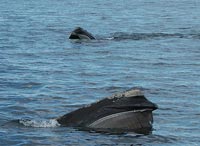 Recently almost one hundred endangered right whales were observed feeding in the waters of Block Island Sound. Given that only between 350 and 400 of the North Atlantic Right Whales are believed to currently exist, the gathering was quite unusual.
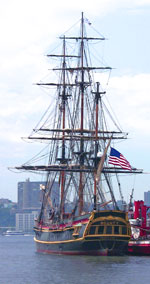 This week
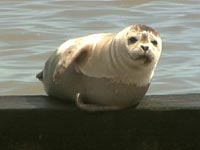 It is feeling like spring in New York harbor. Earlier this month a harbor seal was seem enjoying the sun on an old pier on the Jersey City side of the Hudson. Harbor seal were once common in New York harbor but were hunted and finally driven out. In 2006, after an absence of over 100 years, the first seals began returning to the outer harbor. This year a young seal appears quite comfortable in the inner harbor directly across from lower Manhattan.
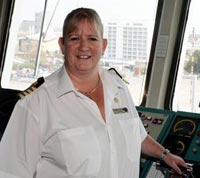 Sarah Breton, 45, from Essex, has been appointed as Captain of the 1,200 P&O cruise ship Artemis. As such she is the first female captain in P&O’s 173 year history and the first female captain of a cruise ship in Britain.
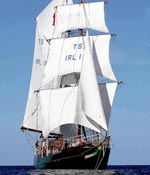 Experts estimate that anywhere from 2,000 to 10,000 shipping containers fall off ships each year. The problem is that they do not all necessarily sink. Some remain afloat, just on the surface, almost invisible to an observer from a ship. Now a draft report of the official inquiry into the sinking of the sail training vessel Asgard II suggests that the a collision with a shipping container may account for the hull damage observed on the wreck.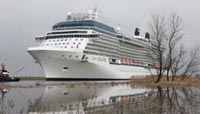
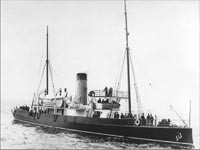 In 2001, divers located the wreck of a ship off the Florida Keys in 220 feet of water. She had the distinctive ram bow of an early 20th century war ship but lacked guns or other weaponry. She has been identified as the Queen of Nassau which was originally the HMCS Canada, the first vessel of the fledgling Canadian Navy. As Canada prepares to mark the 100th anniversary of the Canadian navy next month, marine archeologists at the US’s NOAA are working to designate the wreck as a historic site due of its significance in the evolution of Canada’s military.
 One of the