
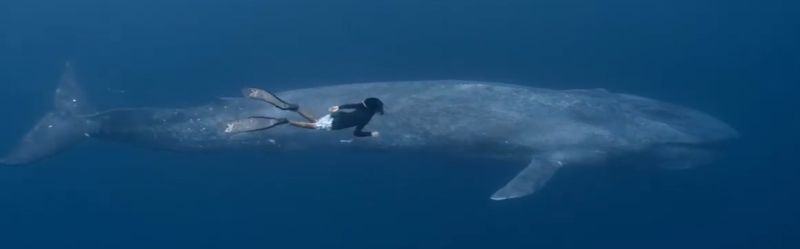
 A recent study by the Monterey Bay Aquarium Research Institute (MBARI) observed that blue whale vocalizations off the coast of Northern California decreased by 40% over a six-year period.
Blue whales are the largest animals to ever live on Earth. They surpass even the largest dinosaurs in size, reaching lengths of up to 100 feet and weights of 200 tons. Researchers were concerned about what the observed decrease in the blue whale song meant to the health of the whale population.
Researchers observed that the dramatic drop in whale song coincided with an oceanic heat wave in the Northern Pacific. The heat wave began in 2013, when a stubborn, dense pool of hot water — later dubbed The Blob — moved from the Bering Sea and the Gulf of Alaska down the eastern North American coast.
In some places, the ocean temperatures were more than 4.5 Fahrenheit above average due to the heating. The Blob grew, covering a 500-mile-wide and 300-feet-deep region in the Pacific Ocean. By 2016, it covered approximately 2,000 miles of the Pacific Ocean.
The increase in temperature allowed for toxic algae blooms that killed off krill — tiny, shrimp-like creatures — and other marine life. The decline in krill was particularly problematic for blue whales. Krill, which are tiny shrimp-like crustaceans, form the basis of the blue whale’s diet. A single adult whale can eat four tons of krill daily.
The researchers have concluded that the lack of food alongside the change in ocean conditions likely contributed to the drop in whale songs in 2015. Simply put, the researchers believe that the whales were simply too hungry to sing.
When krill and forage fish numbers increased in the third year of the study, whale songs started to increase as well, MBARI’s research indicates.
In contrast to the blue whales, humpback whales have a more diverse diet and exhibited less adverse effects. Researchers even observed increased vocalizations from humpback whales during the same time frame, indicating that their diet allowed them to better respond to the changing ecosystem.