
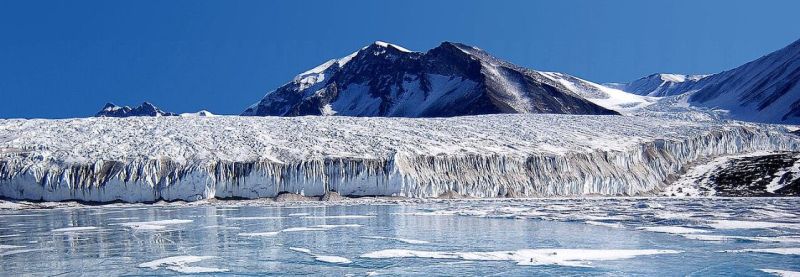
 Under one of the most successful treaties in the world, Antarctica has been a refuge for peace and science. Military activity has been prohibited, and the environment has been protected. The Antarctic Treaty, in force since 1961, promotes international collaboration and lays aside the territorial claims of seven countries, which have all agreed not to act on their claimed ownership.
There are real concerns that all this may change as the current US regime slashes funding to key science programs on the frozen continent. The National Science Foundation — the primary agency that funds and oversees activities in both Antarctica and the Arctic — is proposing massive research cuts to polar science in 2026. Around 70 percent of the money currently in that pot for both poles could vanish.
There are also cuts being finalised for the National Oceanic and Atmospheric Administration, which leads US Antarctic fisheries science, and the lease on the US icebreaker Nathaniel B. Palmer is also set to be terminated.
As science and civilian presence are the primary ways America exerts power in Antarctica, pulling back on research leaves some treaty partners feeling nervous about the future. The void left behind by the US abnegation may invite expansion by the Russians and the Chinese.
China and even Russia have increased their investment in the rapidly warming frozen continent. China now has five permanent research stations and plans for a sixth, and for the first time ever, has overtaken the US in the number of research papers published in the past year.
Russia has also been increasing its presence in Antarctica, upgrading and reopening stations, and building a runway.
“Over time, if China is rising and the U.S. is either standing still or decreasing its capabilities, then that will be read as China taking our place,” said Evan Bloom, an adviser for the Antarctic and Southern Ocean Coalition and a former State Department official who led the U.S. delegations to Antarctic treaty meetings from 2006 to 2020.
Bill Muntean with the Center for Strategic and International Studies. warned that a dip in federal science investments in the polar regions could mean that the N.S.F. is “not going to be the vehicle by which to respond to that growing competition.”
Muntean told The New York Times that the U.S. has been steadily retreating from activities in Antarctica. He said that while the country isn’t closing any stations, it’s not repairing them or building them and has been reducing some logistics capacity.
If scientific budgets fall as military budgets rise in the U.S. government, and that includes more defense-related ships allowed under the treaty, it could send a distinct signal abroad.
Abroad, other countries are worried about a U.S. pullback — in part for political reasons, and in part because they work with the United States on scientific research. Dr. McGee said Australians were watching the U.S. budget proposals and their implications warily.
Asked about the president’s budget proposal, Cassandra Eichner, a spokeswoman at the National Science Foundation, said in a statement that the agency remained committed to ensuring that the U.S. Antarctic Program “maintains an active and influential U.S. presence on the Antarctic continent that enables cutting-edge scientific research.”
Where the future United States will fit into Antarctica, and the treaty’s internal and external politics, is uncertain. Those who work on the continent, and those watching from outside, can’t see what the future holds. They just know it involves less money and less science.
“It’s going to take a while for the U.S. to develop its approach and policies,” Mr. Bloom said. “But every administration does, because they have to.”
Thanks to Dick Kooyman for contributing to this post.