 Around 650 years ago, off the eastern tip of Singapore, a trading vessel slipped beneath the waves and vanished from history. It carried bowls painted with ducks and lotus flowers — porcelain so exquisite that even the Chinese emperor sought them for his own. This week, the world learned just how extraordinary that sunken cargo really was.
Singapore’s First Ancient Shipwreck
The vessel, now formally identified as the “Temasek Wreck,” is the earliest historic shipwreck ever discovered in Singapore’s waters. It was found near Pedra Branca, a rocky outcrop at the eastern entrance of the Singapore Strait — one of the busiest maritime chokepoints in the world, then as now.
The excavation, led by Dr. Michael Flecker of HeritageSG and the ISEAS-Yusof Ishak Institute, was carried out in stages between 2016 and 2019. Working against strong currents and significant depth, the team spent four painstaking years recovering and cataloguing the wreck’s contents. The study detailing their findings was published in the Journal of International Ceramic Studies in June 2025.
A Cargo Beyond Compare
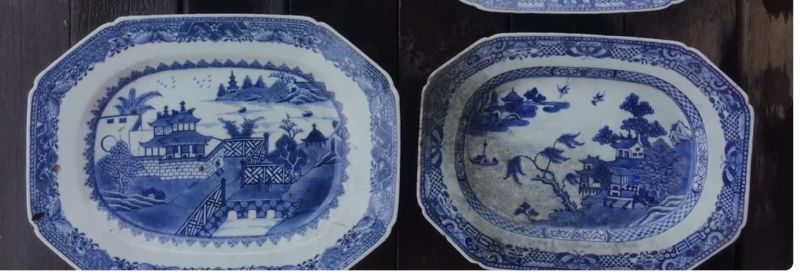
The excavation recovered approximately 3.5 tonnes of ceramic shards along with a small number of intact or nearly intact pieces. But tthe discovery that has sent ripples through the archaeological world is the blue-and-white porcelain. Fragments of around 300 blue-and-white Yuan dynasty porcelain bowls were recovered, more than have been found with any other documented shipwreck.
The rest of the cargo was no less impressive. It also consisted of Longquan celadon, Jingdezhen qingbai and shufu wares, Dehua whiteware, greenwares from Fujian, and Fujian Cizao storage jars. Together, these ceramics paint a vivid picture of the range and volume of goods flowing through 14th-century maritime trade routes.
Ducks That Dated a Shipwreck
One of the more intriguing aspects of this discovery is how the porcelain’s decoration helped archaeologists pin down when the ship sank. The recurring design on the blue-and-white pieces — mandarin ducks in a lotus pond — was the signature motif of Emperor Wenzong, who restricted it for his personal use during his reign from 1328 to 1332. Those restrictions likely ended once he was deposed, meaning commercial kilns then produced many more ceramics featuring this motif for export
Working forward from there, the imperial kilns were likely shut down about 20 years later following the invasion of the Red Turbans, a peasant rebellion movement. Even conservative estimates for dating the shipwreck fall between the late 1320s and 1371, when the first Ming emperor banned commercial trade. The ducks, in other words, serve as a timestamp.
The Mongols and the Porcelain Nobody Credited Them For
Yuan blue-and-white porcelain has a strange historiographical story. The Yuan Dynasty (1271–1368) was founded by Kublai Khan — the Mongols — and the artistic brilliance of the period was long overlooked precisely because of their reputation. As Dr. Flecker noted, as soon as the Mongols retreated from China in 1368, the knowledge that blue-and-white was a breakthrough of the Yuan period got lost — as late as the 1930s, scholars would misidentify the porcelain as produced by other dynasties. It seemed inconceivable that a conquering people associated with destruction could have presided over one of the most significant innovations in ceramic history.
The Temasek Wreck helps correct that misreading. Its tightly dated cargo now serves as a valuable reference collection for researchers trying to identify Yuan porcelain found elsewhere without a clear archaeological context
What It Tells Us About Singapore
The wreck does more than rewrite ceramic history — it rewrites Singapore’s own story. This discovery suggests that Singapore may have been a bustling hub for global trade much earlier than previously believed. The ship was most likely sailing from Quanzhou, a major port on China’s southeastern coast, directly to Temasek — the ancient settlement that preceded modern Singapore.
The mix of finely decorated porcelain and sturdy storage jars reflects the range of goods moving through Temasek — from tableware used by wealthy residents to containers that carried everyday commodities. In that sense, the Temasek Wreck preserves more than a collection of ceramics; it records the movement of goods through a port that connected southern China with Southeast Asia.
What Happens Next?
The wooden hull of the ship did not survive — centuries of marine life saw to that. But the ceramics endured. The National Heritage Board is currently overseeing the desalination and conservation of the artifacts. Once the salt is fully removed to prevent the ceramic glazes from shattering, the items are expected to be featured at Singapore’s national museums.
When they go on display, visitors will be looking at bowls and bottles that were already old when the Black Death swept Europe — objects that crossed a dynasty’s fall, a sea journey, and 650 years on the ocean floor to reach them. The mandarin ducks, painted in cobalt blue on white porcelain, will be waiting.
Centuries-old shipwrecks discovered near Pedra Branca
Thanks to Alaric Bond for contributing to this post.