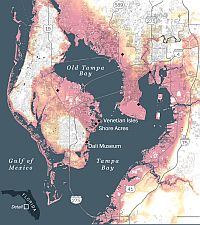
Graphic: Washington Post
Hurricane Irma devasted islands in the Caribbean and did serious damage to cities in Florida. 6.5 million residents of Florida alone lost power and the damage toll is still being calculated across the state. The cities on the West Coast of Florida, particularly those on Tampa Bay, were damaged by high winds and rain but missed the predicted deadly storm surge when Irma jogged slightly eastward.
So far, the Tampa Bay area has been remarkably lucky with hurricanes. One day that luck may run out. When it does, the result won’t be pretty.
By luck, a quirk of geography, or perhaps both, no significant hurricane driven storm surge has hit the Tampa Bay area in almost 100 years. The cities of Tampa, St.Peterburg, and Clearwater are highly vulnerable to catastrophic flooding damage from a storm surge.
Recent studies have identified Tampa as the city most vulnerable to storm surge in the US, ahead of New Orleans. A study by the World Bank called Tampa Bay one of the 10 most at-risk areas on the globe. Fortunately, despite potentially dire projections, the storm surge from Irma in Tampa Bay and much of the rest of the West Coast of Florida was a manageable 2-4 feet. Continue reading →

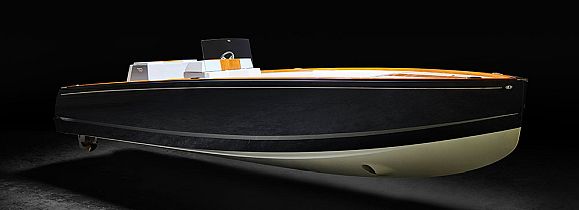 Hinckley Yachts claims to build “luxury yachts with innovative technology.” Their new 28’6″ fully electric runabout Dasher lives up to the boast. Fortune magazine referred to it as the “Tesla of luxury yachts.”
 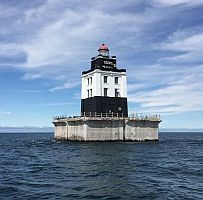 There are always iconic objects that are almost irresistible in contemplation. They represent ideas which are far too easy to fall in love with. I really wanted to own an old style Volkswagen “bug” and then I owned one and understood my mistake. The old bug had a nearly indestructible engine but the body of the car had almost entirely rusted away. It had seemed like a good idea at the time. Likewise, I had friends who were in love with the idea of converting an almost free surplus lifeboat into an oceangoing yacht. That didn’t work out too well either.
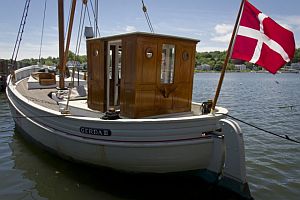 Among the fleet of ships and boats that make up the fleet at the
 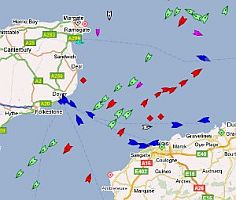 Following the recent collisions between US Navy destroyers and merchant ships, various internet sites posted the AIS tracks of the collisions. Well, they posted half the AIS tracks anyway. The merchant ships used AIS while the Navy did not. While US Navy ships have AIS transponders onboard they do not transmit their positions nor apparently do Navy crews regularly consult the receivers showing the location and course of other ships. It was possible to track merchant ships’ courses but not the destroyers’. That now appears to be about to change. The Navy appears ready to finally switch their AIS transmitters on.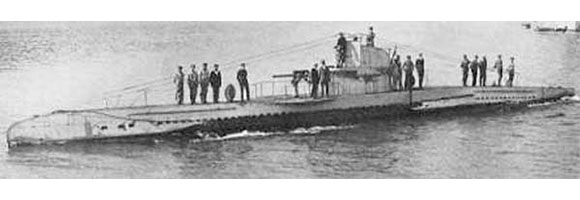
 I will be participating in Jersey City’s
 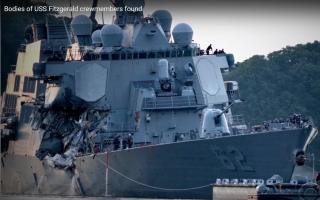 The fallout continues from the recent collisions with merchant ships in the Pacific involving the destroyers
  My latest novel,
  Not all oil pollution is petroleum. Recently, there have been reports of strange yellow blobs washing up on the beaches of France’s Opal Coast. The blobs described variously as
 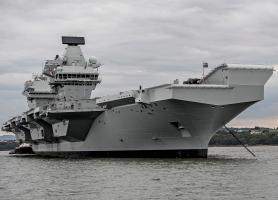 The UK’s latest and greatest new aircraft carrier, HMS
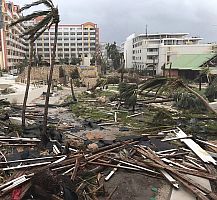 Hurricane Irma absolutely devastated many islands in the Caribbean. Now, in the aftermath of the catastrophic storm, aid is being sent by a small armada of ships and boats from governments, corporations and private citizens.