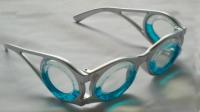
 Charles Darwin once wrote, “If it was not for sea-sickness, the whole world would be sailors.” Some of us are more susceptible to mal de mer than others. Apparently, Darwin was very prone to sea sickness. From my own experience, I am fairly lucky, falling somewhere about the middle of the misery spectrum — neither quite immune nor wholly incapacitated by sea sickness. In a few weeks, I will be setting off an a five day delivery trip on my new/old boat with a new crew, so I will be sure that we have all the standard anti-sea-sickness “remedies” — a stock of saltine crackers, apples, ginger-ale and, if need be, Bonine. Often the best defense against motion sickness is just keeping an eye on the horizon. I wonder, however, if I am being too old-school in my approach. Perhaps, we should consider anti-sea sickness googles and glasses.
Anti-sea sickness googles and glasses have been around for almost a decade, yet they haven’t seemed to have caught on. Part of the issue may be expense. The other consideration is that the most effective googles simply look funny.
 Granny is dead. In August of last year, we posted
  NASA scientists this week, made an exciting announcement. They have discovered the necessary chemical mix to potentially support life in the
 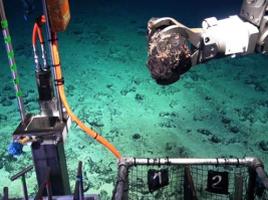 Deep-sea mining
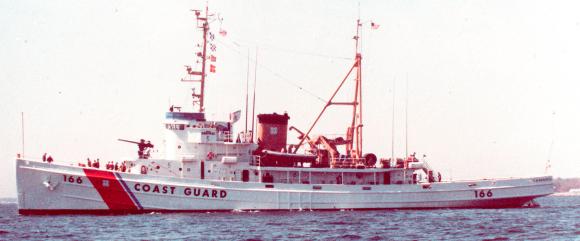 Last October,
 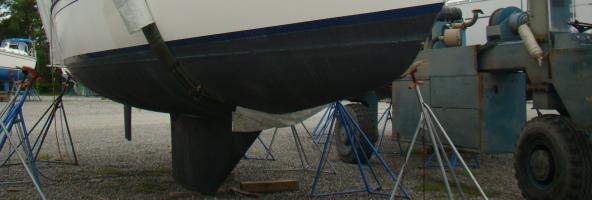 I am sure that I am not the only one who really does not like anti-fouling bottom paint. By definition, anti-fouling bottom paint is a biocide — it kills life — which is fine and dandy if that life is a barnacle. It is not great as I wonder how much dust is getting past my respirator as I prep the bottom of the boat between seasons. I recently learned about
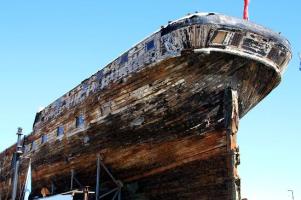 At the end of January, we posted
 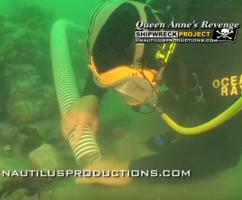 A video producer who produced video of the excavation of a pirate ship is now suing the State of North Carolina and others for piracy.
  Great news. The
 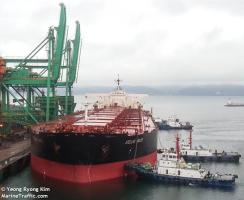 So far, only two of the crew of 24 have been rescued after the Very Large Ore Carrier (VLOC) Stellar Daisy capsized and sank suddenly on Friday, March 31st. The 266,00 DWT Marshall Island registered bulk carrier was reported to have been in calm conditions, roughly 2000 miles off Montevideo, Uruguay, when she capsized. The ship departed from Brasil bound for China on March 26 with a full load of iron ore. The Stellar Daisy had a crew of 14 Filipinos and eight South Koreans.