 In 1981, Ngoc Nguyen was 13, one of the at least 800,000 of the so-called Vietnamese “boat people” who fled Vietnam by boat after the end of the war. He was crammed in an overcrowded boat with his family, among 65 other refugees adrift in the South China Sea, when they were picked up by the Arnold Maersk. Now 34 years later, took to the bridge of the container ship, Thomas Maersk, as its captain.
From Maersk.com: Nguyen remembers his family’s escape in 1981 as if it were yesterday: “Two days had passed since the patrol boat had chased us away from the shores of Vietnam. With only a compass, a dwindling supply of gas and no food or water, our chances of reaching land safely were looking bleak.”
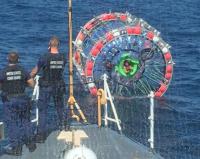 “Bubble Man”
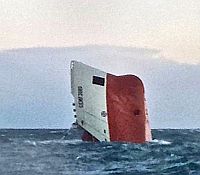 In January of 2015,
  Yesterday, we posted about a project to recreate sailor’s grub from the 17th century. Food for sailors has improved dramatically in the last three hundred years. Or has it? The
 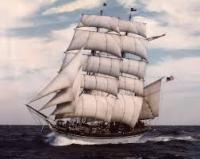 What we know of the diet of 17th-century sailors comes from written records — log entries, diaries, and journals. Most accounts say that it was pretty bad. Now, Grace Tsai, a Ph.D. student specializing in nautical archaeology at Texas A&M University, wants to investigate sailor’s grub, by recreating the food as accurately as possible.
 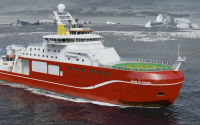 We previously
 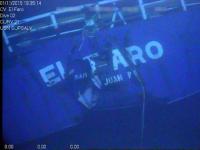 Last November, we posted that the National Transportation Safety Board (NTSB) had
 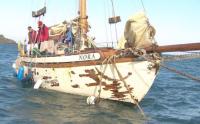 Steve Shapiro’s frequently rescued sailboat Nora, has been sold. In January,
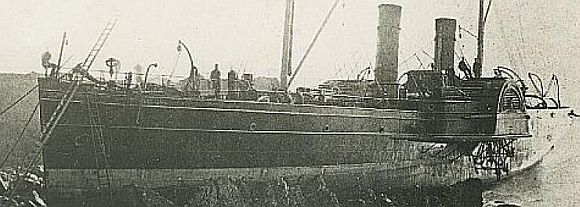 The Confederate blockade runner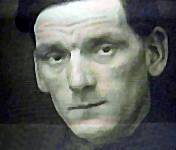

 The Russians do not appear to like the US Navy operating ships in the Baltic Sea.
 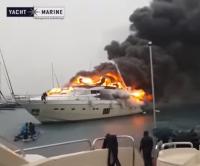 The headlines in the
 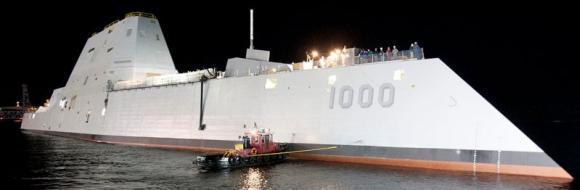 The Navy’s newest destroyer, the $7.5 billion