 Some folks think that those around New York City are unfriendly, which couldn’t be further from the truth. Here is a short video of a seal resting on a patch of ice in the Hudson River waving at Megan Viscovich and her co-workers who spotted the seal from their office overlooking the river in Edgewater, NJ. As reported by 4 New York: “It was a young seal and seemed to be full of life, looked like it was waving and flapping its rear fins,” she said in an email. Viscovich said the Edgewater Fire Department and an NYPD harbor unit responded. The NYPD said its divers worked with Edgewater firefighters to help the seal get back into the river.
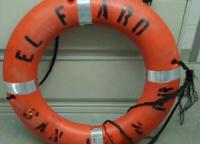 Why did Captain Michael Davidson set a course that brought his ship, El Faro, into the path of Hurricane Joaquin last October with tragic results? That question, for which we many never have a fully satisfactory answer, has been at the core of the initial investigation being held at US Coast Guard hearings in Jacksonville, Florida which began on Tuesday.
Several officials from TOTE Services, the ship owner and operator, were questioned at the hearing. Vice President of Commercial Maritime Operations Philip Morrell reiterated that the captain made the final decision as to ship routing. Captain Davidson had sent an email the day before encountering the hurricane, requesting a course change on the way back to Jacksonville from Puerto Rico. Morrell responded to questions about the email by saying that captain did not require permission and that the email was sent as a courtesy to the home office. TOTE President Phil Greene was questioned on Wednesday and said much the same thing, albeit not so directly.
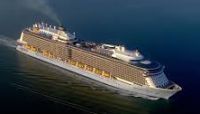 A few days after the Anthem of the Seas was forced to return to port after being caught in 120 knot winds off Cape Hatteras, Bill Baumgartner, Royal Caribbean’s senior vice president of Global Marine Operations, told The Jersey Journal that predictions of the storm had forecast wind speeds of 55 to 65 knots, or around 63 to 74 miles per hour, which “these ships are made to withstand without any significant issue.”
I read that sentence several times. That is apparently what he said. A senior executive at Royal Caribbean appears to suggest that the company knowingly sent one of their ships with 4,500 passengers into a violent winter storm with possible hurricane force winds.
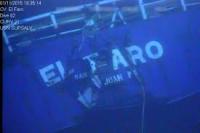 There are still almost as many questions as answers as to why the US flag ro/ro El Faro sank in Hurricane Joaquin last October with the loss of the 33 aboard. Today, the United States Coast Guard Marine Board of Investigation begins a formal investigation into the tragedy. The first hearing is being held in Jacksonville, FL, the port from which El Faro sailed on her final fatal voyage.
The current hearing will last through Friday and according to the Coast Guard press release will “focus on the pre-accident historical events relating to the loss, the regulatory compliance record of the EL FARO, crewmember duties and qualifications, past operations of the vessel and the Coast Guard’s Search and Rescue operations. During a later hearing session (date to be determined) the accident voyage, including cargo loading, weather conditions and navigation will be examined in detail. The National Transportation Safety Board, which conducted its own investigation, will fully participate in the Marine Board of Investigation hearings.”
The National Transportation Safety Board (NTSM) also recently announced that the search for El Faro‘s Voyage Data Recorder (VDR), the so-called “black box,” will resume next April and last about two weeks. Continue reading
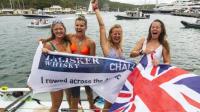
Photo: Ben Duffey
Recently, four British women competing in the Talisker Whiskey Atlantic Challenge set a new record as the youngest and fastest all-female crew of four to row across the Atlantic Ocean. Gee Purdy, 23, Bella Collins, 23, Lauren Morton, 26, and Olivia Bolesworth, 27, in the “Row Like A Girl” team,” rowed 2,793 nautical miles in 40 days. The previous record, also set in the Talisker race in 2012, was 45 days. “Row Like A Girl” came in second overall behind “Ocean Reunion”, a British team of four; Angus Collis, Gus Barton, Joe Barnett, Jack Mayhew; which also set a new record of 37 days. Both “Ocean Reunion” and “Row Like A Girl” broke the previous overall record of 41 days. Ten teams in the Talisker Race are still at sea.
Another British four woman rowing team attempting to cross the Atlantic has not faired as well. Continue reading
It is now 3 degrees Fahrenheit on the West bank of the Hudson River. Hope your Valentine’s day is warmer. On such a chilly morning, it would be nice to escape to a tropical island. Here is a repost from a few years ago of a series of Valentine Islands, not all of which are tropical. Are they islands of love on the storm-tossed seas of life? Sadly, they probably are not, but they do look like Valentine’s Day hearts.


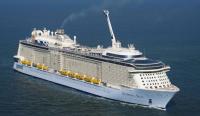 In recent years, there have been many claims made that modern cruise ships are inherently unstable and unseaworthy. Naval architects, shipyards, and regulators, have replied, “No, they are not,” but the argument continues. Recently, the Anthem of the Seas put the argument to the test. As ungainly, bulky and high-sided as she indeed is, she did rather well under terrible conditions. Here is an article I wrote for gCaptain, yesterday, which I am reposting with permission.
Anthem of the Seas — Is She Seaworthy?
On Wednesday night, the Royal Caribbean cruise ship, Anthem of the Seas, made it safely back to its berth in Cape Liberty in New York harbor, a bit battered, but generally in good condition. Her roughly 4,500 passengers disembarked after a harrowing cruise to nowhere. The obvious first lesson of this unfortunate voyage is that a winter cruise from New York harbor around Cape Hatteras may not be such a good idea. The weather can get very rough. In this case, extremely rough. The captain reported wind speeds of 150-160 knots (172-184 mph), wind speeds comparable to a Category 5 hurricane. There were also reports of 30-foot waves. The Anthem of the Seas was seriously in danger.
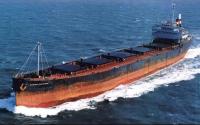 Thirty-three years ago today, on February 12, 1983, the collier SS Marine Electric loaded with 24,800 tons of steam coal, capsized and sank in a storm 30 miles off the coast of Virginia. Thirty-one of the 34 crew members died. While nothing good can be said about the loss of 31 sailors, the aftermath of the Marine Electric tragedy led to important improvements in safety in the shipping industry.
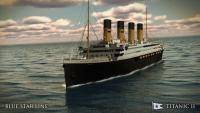 Only last June, the media were reporting the project to build a near-replica of RMS Titanic was dead. The Daily Echo was typical, writing: The highly ambitious plan to build a replica of the ill-fated Southampton liner, Titanic, has apparently sunk without even getting off the drawing board. Now, the Titanic II project appears to have been revived. Reports are that the near-replica of its ill-fated namesake will be delivered in 2018 and that its maiden voyage will be from Jiangsu in Eastern China to Dubai. The original Titanic never completed her maiden voyage from Southampton to New York in 1912, due to an unfortunate brush with an iceberg leaving 1,500 dead. Let’s hope the Titanic II does better.
While it is unclear if any steel has yet to be cut, through the wonder of 3D modeling, renderings of the interior spaces intended to look like the original have been released.
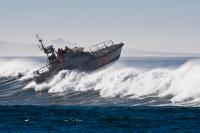
47′ Motor Lifeboat
It takes a special breed of sailor to attempt to crest the monstrous waves of a harbor bar in a motor lifeboat. It also takes a very specially designed and built boat to make crossing the bar possible. We recently reviewed the movie, “The Finest Hours,” which told the story of the what is considered by many to the greatest small boat rescue in history. In 1952, coxswain Bernie Webber with a crew of three took CG-36500, a 36-foot motor lifeboat, across Chatham bar in a winter Nor’easter to rescue the crew of the T2 tanker SS. Pendleton, which had broken in half in the storm.
When large ocean swells hit sand bars at a harbor entrance, the resulting breaking waves can rise to monstrous heights. Most fishermen and other boatman stay in port. When a ship or boat is in danger offshore, however, the Coast Guard has no choice but to go out and in many cases, a motor lifeboat is the only way to get the job done. The boats are designed to be self-righting and to survive the worst the sea can throw at them. A brief overview of these amazing boats.
Continue reading
 In a post yesterday, we raised the general question of why Royal Caribbean Line (RCL) would run winter cruises which passed off Cape Hatteras, an area known for bad weather, particularly in the winter months? Today many are asking the specific question, why would RCL send the Anthem of the Seas with over 4,000 passengers straight into a major storm which had been predicted days in advance?
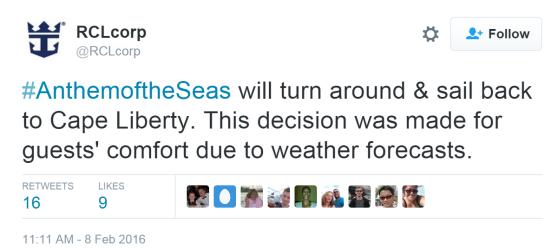
 We posted this morning about the severe storm encountered by the Royal Caribbean cruise ship, Anthem of the Seas, off Cape Hatteras. As of this morning, the ship was bound for Port Canaveral but was being delayed by weather according to a tweet on the RCLcorp Twitter page. Then shortly after 11 AM, RCL announced that they were turning the ship around and that it will return to Cape Liberty, its terminal in Bayonne, New Jersey, in New York harbor. Thanks to Irwin Bryan for the heads-up.
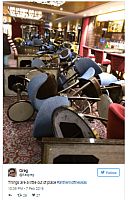 The winter storm that struck Royal Caribbean’s Anthem of the Seas as it cruised off the coast of the Carolinas this weekend also set off a storm on Twitter. Passengers and crew tweeted photos and video of overturned furniture, damaged rails, and reported large waves and winds of 100-150 MPH. No one was reported to be have been injured.
As reported by the Mirror, the passenger and crew tweets ranged from fearful to humorous. One traveler posted a photo of smashed crockery with the message, “Lord, please help us.”
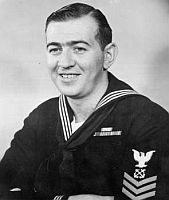 Yesterday, we posted our review of the movie, “The Finest Hours,” a dramatization of the 1952 rescue of 32 of the crew of the T2 tanker SS Pendleton, which had broken in half in a winter Nor’easter in the Atlantic off Massachusetts. The crew was rescued by four Coast Guardsmen in the CG36500, a 36′ wooden motor lifeboat, under the command of Coxswain Bernie Webber. Just to reach the crippled tanker, Webber and his men had to cross the Chatham bar in horrific conditions. They then succeeded in locating the tanker at the height of the storm and rescuing 32 crew in a boat designed to carry 12, including the crew. Their actions are considered by many to be the greatest small boat rescue in history.
In 1967, Bernie Webber sat down for an audio interview on radio station WOCB, Yarmouth. He describes the amazing rescue in his own words.
Originally posted on gCaptain. Reposted with permission.
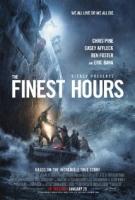 “The Finest Hours” is far from a perfect movie. Nevertheless, it recounts a remarkable story of heroism at sea that is well worth retelling. For anyone who has spent any time around ships, it is also hard to resist a movie in which one of the lead characters is a grumpy chief engineer.
On February 18, 1952, the T2 tanker SS Pendleton broke in half in a Nor’easter, in 60-foot seas and 70-knot winds off Cape Cod. The US Coast Guard Chatham Lifeboat Station dispatched BM1 Bernie Webber with a crew of three in a wooden 36-foot-long motorized lifeboat to search for the Pendleton. In almost impossible conditions, Webber and his crew crossed Chatham bar, located the ship and rescued 32 of the Pendleton survivors in a boat designed for 12, including the crew. It is considered to be the greatest small boat rescue in history. The movie, “The Finest Hours,” starring Chris Pine, Casey Affleck, and Holliday Grainger is a dramatization of the rescue, based on a book of the same name by Michael J. Tougias and Casey Sherman.