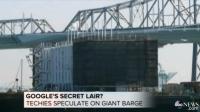
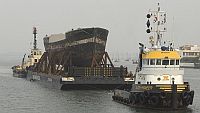
 Google has been causing quite a stir on the waterfront. Two mysterious barges have appeared, one on the Pacific in San Francisco bay and one on the Atlantic coast in Portland, Maine. The San Francisco barge is reported to be 250 feet long, 72 feet wide, and 16 feet deep. On each barges, four story windowless rectangular structures are being fabricated from shipping containers. What are they for? Those who know aren’t saying. Even members of the US Coast Guard and inspectors from other government agencies involved in the project have signed non-disclosure agreements.
The speculation about what Google is up to ranges from floating data centers, to a superstore for Google Glasses, to research centers, to a refuge from a zombie apocalypse, or even a giant paint-ball arenas for senior Google execs.
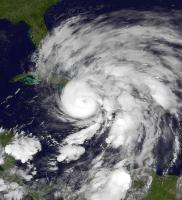 Today is the first anniversary of
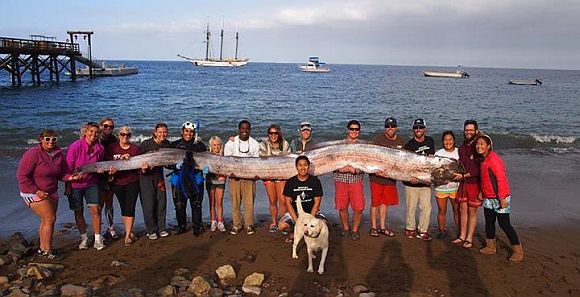 Last week, two rare oarfish washed up (or in the case of the first was dragged up) on the shores of Southern California. Yesterday, Japan was stuck by a 7.3 magnitude earthquake. A coincidence? It seems that there is Japanese folklore that says that sighting of oarfish portends a coming earthquake. Oarfish are the longest bony fish in the ocean and can grow up to around 17 meters or 56 feet long. The two that washed up in California were only 18′ and 14′ long, which is still very impressive. Oarfish, which tend to stay in deep water, are rarely seen on the surface. When they do make an appearance they are understandably often referred to as “sea serpents,” given their long snake-like bodies. It is easy to understand how they might be useful in folklore as a predictor of ill-tidings. If sea serpents start appearing, something bad must be coming. In Japan, the oarfish is traditionally known as the “Messenger from the Sea God’s Palace.” (If the Sea God is sending you a message, it is better sent by a sea serpent rather than a sea bass.)
 The first US Navy “
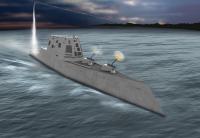 At about the same time that the Forrestal was sent to scrap, Bath Iron Works in Maine floated
 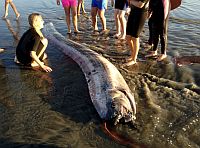 A second rare
 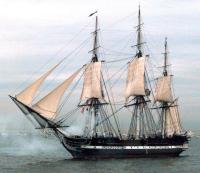 October 21st is a busy day in nautical history. In addition to being the anniversary of the
 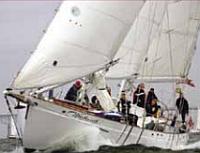 Congratulations to all the racers in this year’s
  “
“ The composite clipper ship,