I have been a fan of Sailor Twain for some time. Sailor Twain, or The Mermaid in the Hudson is a webcomic by Mark Siegel. He has been posting pages online every Monday, Wednesday and Friday, the tale unfolding in the tradition of a 19th century novel. For those of us who haven’t always kept up, the graphic novel is being published in its entirety on October 2, 2012.
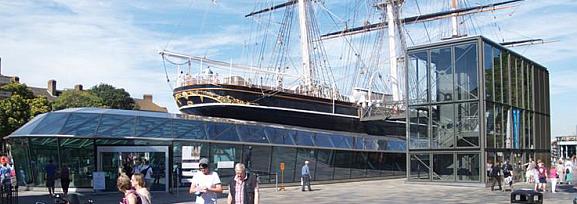
In April, we posted about a scathing review of the Cutty Sark restoration by Andrew Gilligan, the Telegraph‘s London Editor. He referred to the restoration as “a clucking, Grade A … turkey.” I have not seen the ship but I share many of Gilligan’s concerns. (I will be visiting the composite clipper ship in a few weeks when I attend the Historical Novel Society Conference in London, so I will have the opportunity to see for myself.) Mr. Gilligan is not alone in his dislike of the Cutty Sark restoration. The British architectural trade journal, Building Design, has announced that the restoration of the historic tea clipper is the 2012 winner of the Carbuncle Cup for the worst new building design in Britain.
Grimshaw’s disastrously conceived restoration of the Cutty Sark is winner of this year’s BD Carbuncle Cup, tragically defiling the very thing it sets out to save.
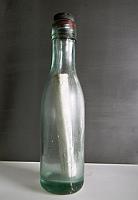
Last year around this time, we posted about Harold Hackett of Prince Edward Island, who since 1996 has cast 4,800 bottles containing messages into the sea and has received 3,100 responses. Harold may hold the record for the most bottle borne responses, but recently we learned of a Scottish fisherman who found the world’s oldest message in a bottle. The bottle was cast into the sea 98 years old by Captain C. Hunter Brown, a scientist at the Glasgow School of Navigation, who was studying the currents in the North Sea. It was one of 1,890 bottles released on June 10, 1914, and the 315th to be entered into Captain Brown’s log, which is still kept and updated by Marine Scotland Science in Aberdeen.
On Saturday, a passenger and a crew member on the schooner Bill of Rights were wounded by bird shot apparently fired from the topsail schooner Amazing Graceduring a mock sea battle at the Tobisha Tall Ship Festival at Dana Point, CA. Neither the passenger or crew member were seriously injured.
“Battle cruises,” or mock sea battle where tall ships fire their guns at each other are very popular of the tall ship circuit. But where do the ships get their powder? Apparently, in this case at least, from 12 gauge shotgun shells which are fired from their small deck guns. Unfortunately the blank shells, containing powder but without pellets, look quite it a bit like the shells with pellets. The incident is being investigated as an accident.
One year and one day after the Battle of Lake Erie, an American squadron, under the command of Master Commandant Thomas Macdonough, defeated the Royal Navy on Lake Champlain in a bloody battle at Plattsburgh Bay. The Battle of Plattsburgh turned back an invasion force of 11,000 British troops which was intended to do nothing less than redraw the map of the United States. Like the Battle of Lake Erie, the Battle of Plattsburg was fought in fresh water hundreds of miles from the ocean. It was not a large fleet battle, and yet, was probably the most important naval victory of the war.
The best known naval battles of the War of 1812 were single ship duels between US Navy frigates and ships of the Royal Navy. Nevertheless, the two most important American naval victories of the War of 1812 were fought in fresh water, hundreds of miles from the ocean. Neither involved large fleets of ships, yet each was critical to the outcome of the war.
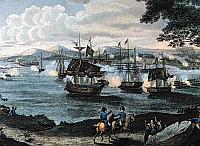
One hundred and ninety nine years ago today, on September 10, 1813, in what has become known as the Battle of Lake Erie, five schooners, three brigs and a sloop, under the command of Oliver Hazard Perry defeated and captured two ships, two schooners, a brig and a sloop of the Royal Navy at Put-in-Bay in Lake Erie off the coast of Ohio. The victory gave the Americans control of Lake Erie for the rest of the war, denying the British and Canadians a key supply line and allowing the Americans to retake Detroit and win the Battle of the Thames to break the Indian confederation of Tecumseh.
Good news. On Friday, we posted that the captain of the U.S. flag heavy lift ship, MV Ocean Atlas, had been arrested in Maracaibo, Venezuela after three rifles were found aboard the ship. The rifles had reportedly been listed in the ship’s manifest. Reports are that Venezuelan authorities had raided the ship, acting on a tip that illegal drugs were onboard. When no drugs were found, Captain Jeffrey Raider was arrested for arms trafficking based on the three locked-away rifles. There were reports that the rest of the 14 man crew would also be charged. A U.S. State Department official confirmed Sunday that the charges had been dropped. The ship is expected to sail today or tomorrow.
The 4,380 TEU container ship Amsterdam Bridge caught fire on a voyage between Mumbai to Colombo. The ship returned to Mumbai and is now at an outer anchorage. Recent reports suggests that the fire is contained if not necessarily completely extinguished. VesselTracker.com is reporting that Coast Guard officials suspect that the fire erupted in the engine room of the vessel. Other sources say that the fire spread to the mid portion of the ship, which is said to be carrying approximately 112 containers loaded with hazardous cargoes. No injuries have been recorded. Thanks to Phil Leon for passing along the news. (Note: the original post misstated the container capacity of the ship. Thanks to Terra for pointing out the error.)
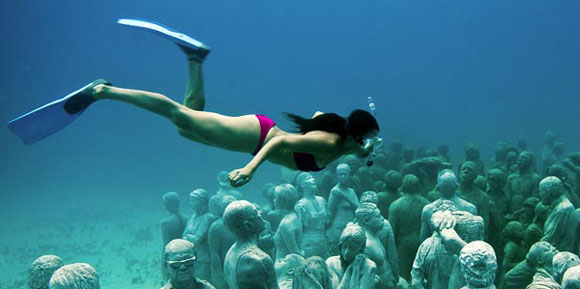
Snorkelers and divers swimming south of Isla Mujeres and off Punta Nizuc off Cancun will now find themselves in a monumental underwater sculpture garden of life-sized human statues rising up from the sandy bottom in crystal tropical clear waters. The 450 sculptures are the work of British artist Jason deCaires Taylor and are part of MUSA (Museo Subacuático de Arte,) a vast underwater museum in the in the waters surrounding Cancun, Isla Mujeres and Punta Nizuc.
The Great Mayan Reef is the second largest barrier reef in the world. In addition to being threatened by pollution, over-fishing and ocean warming, the reef is also threatened by its popularity. The section of the reef adjacent to the resort islands of Cancun and Isla Mujeres attracts 750,000 people each year. One of the stated objective of the museum is to take pressure off the natural reef by drawing visitors to the sculpture reef.
The plan for a new artificial reef was wonderful, and beautifully executed until the very last minute. Artist Chris Wojcik had constructed a 47-foot-long, 25,000-pound concrete sculpture of a horseshoe crab, which was welded to two barges and was to be sunk in the Atlantic off the New Jersey shore as a new artificial reef, providing both a new habitat for sea life and a destination for recreational divers. The project was dubbed “Art as Reef.” (See our previous post here.)
The crab sculpture was towed out to the reef site in the Atlantic on Axel Carlson Reef, in 80 feet of water, 4.4 miles from the Manasquan Inlet.. The plan was to flood the barges while stabilizing them with straps from a crane barge to ensure that the barges sank on an even keel. Everything went well until the after crane strap broke. Instead of a level sinking, the barge dove unexpectedly, cracking and crushing the concrete sculpture. As reported by the Asbury Park Press: “It’s cut in pieces and unrecognizable,” artist Chris Wojcik said early Friday morning, after making dives Thursday on the artificial reef structure intended to be the sculpture’s home. “I’m devastated, is a pretty accurate way to put it,” Wojcik said.
While it may not be the work of art intended, the broken crab and barge will still serve as an artificial reef, providing an new habitat for marine life.
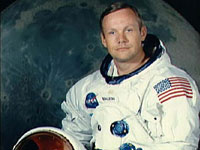
Neil Armstrong, the first man to set foot on the moon, best known for navigating the Sea of Tranquility, began his career as a Navy aviator. Armstrong, who died on August 25, at the age of 82, will be buried at sea as per his wishes. NASA has scheduled a public memorial service to be held Sept. 13 at Washington National Cathedral. No date has been set for the burial at sea which will be performed by the US Navy.
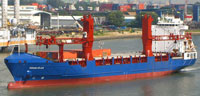
On August 29, the multipurpose US flag cargo ship, M/V Ocean Atlas, arrived in Maracaibo, Venezuela. Not long after, the ship was detained by Venezuelan security forces and was repeatedly searched by agents from Interpol and the Venezuelan drug enforcement agency, reportedly based on a tip that illegal drugs were being carried aboard the ship. When no drugs were apparently found, the Venezuelan authorities arrested the captain of the ship on charges of arms trafficking, after finding three rifles on board. The rifles were apparently listed in the ship’s manifest. The US crew were initially detained aboard, though there are reports that warrants have been issued for their arrest as well and that some or all have been taken ashore for questioning.
Cabot and his two friends set out along the Newfoundland coast in winds that neared gale force Saturday morning, Ellis said, and the winds increased during the day. Ellis said that from what he understood, around midday, with winds coming from the rear of the boat from about a 45-degree angle, Cabot came from below deck to relieve the helmsman. A wave struck with such force that the boat was knocked on its side, spilling Cabot and the helmsman into the water.