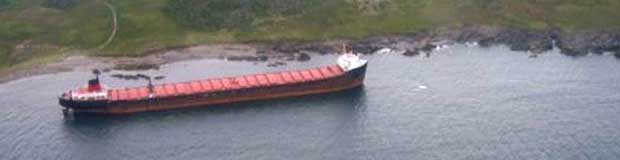
The Liberian flagged container ship, MV Rena, ran aground on the Astrolabe Reef off Tauranga, New Zealand yesterday, flooding two cargo holds. The ship is loaded with approximately 2,100 containers and has around 1,700 tonnes of heavy fuel. There has been no spillage of the heavy fuel. Hydraulic oil was reported to have leaked and to have created a visible sheen on the water but was dissipating. The crew of 23 have remained aboard the ship. The ship has developed a 10 degree list but is stable on the reef.
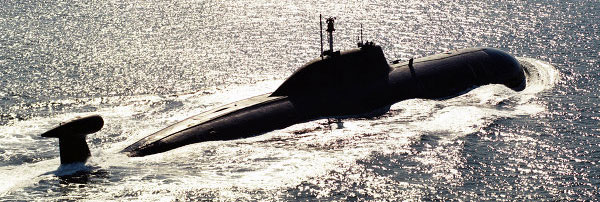
Next month, the Russian nuclear submarine, Nerpa, will be delivered to the Indian Navy, which has leased the submarine for a reported $900 million from the Russians for ten years with an option to buy. The delivery of the new nuclear sub to India, which will be renamed INS Chakra, has been long, strange and ultimately tragic.
Continue reading
The evacuation of British troops and civilians from France in 1940 did not end with Dunkirk. Several weeks later, on June 17, 1940, the British Cunard liner Lancastria was loaded to capacity with troops and civilians off the French port of St. Nazaire, when she was struck by three direct hits from a German Junkers 88 bomber. As many as 6,500 men, women and children were lost when the ship sank. It was the worst maritime disaster in British history. The sinking claimed more lives than the combined losses of Titanic and Lusitania. News of the disaster was covered up. Churchill said that, “The newspapers have got quite enough disaster for today, at least.”
Now 71 years after the sinking, the “silent sacrifice” of those aboard the Lancastria was finally acknowledged this weekend as a memorial to the victims was unveiled on the banks of the Clyde at the site of the the shipyard where the ship was built.
Victims of HMT Lancastria sinking honoured with memorial
Continue reading
There is a certain magic to drydocks. They give you the ability to take in the whole ship in almost a single look and provide the one chance to get the bottom clean and whatever needs fixing below the waterline fixed. Here is a short video of the Brig Niagra on dock at the Great Lakes Towing Shipyard in Cleveland, Ohio. Thanks to Irwin Bryan and Alaric Bond for passing along the news.
What is it about ships being towed to the scrap yard? The MT Phoenix under tow, on her way to the scrap yard last July broke her towing cable and drifted ashore on Salt Rocks in Sheffield Beach, South Africa. She was only freed last month and was subsequently scuttled. Last June, the perhaps poorly named MV Wisdom was under tow to a scrap yard when she broke her cable and drifted ashore on Bandra beach, in suburban Mumbai. And two weeks ago , the Canadian Miner, on her way to a scrap yard in Turkey, broke her tow line and ran aground near Scatarie Island, off the coast of Cape Breton, Canada. Mammoet Salvaging, a Dutch salvage company, has prepared a salvage plan and has presented it to Canadian authorities.
The surf in San Diego county has been putting on quite a light show on recent evenings. The shore has been hit by a bout of “red tide,” a bloom of the dinoflagellate Lingulodinium polyedrum. The bad news is that this dinoflagellate can be toxic to fish and shellfish. The good news is that it is wildly bio-luminescent turning the Pacific waves a soft neon blue as they break on the beach. See our post about red tide in New York harbor around this time last year.
Red Tide – Bioluminescent San Diego, 2011
Thanks to Irwin Bryan for passing the story along.
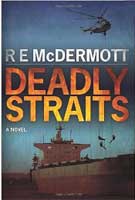
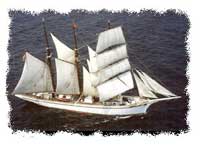
For the sake of full disclosure, I am not a huge fans of thrillers, particularly thrillers involving ships. The plots often strike me as implausible and the descriptions of the ships and ship operations often border on the laughable. (Too often, they leap across the border.)
This is not the case however with R.E. McDermott’s Deadly Straits. The book is a maritime thriller whose plot is disturbingly plausible. And unlike virtually every other thriller I have come across which features ships, Deadly Straits consistently gets it right. It is a thriller that even a thriller skeptic and ship geek can love.
Continue reading
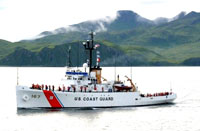
Last March we posted that the U. S. Coast Guard Cutter Acushnet, the oldest commissioned Coast Guard cutter, was being sold in an online auction. The ship was reportedly sold to an unidentified buyer. The ship has now been put up for auction on EBay by “masterbushpilot0.” The “Buy It Now” price has been set at $10,000,000. The current highest bid is $27,100 and the reserve price has not been met. The auction ends in four days.
HISTORIC USCGC Acushnet Coast Guard Cutter / Diver Vessel UP FOR AUCTION

Marie Didieu's house at Ras Gitau on Manda Island. Photograph: Simon Maina/AFP/Getty Images
Marie Didieu, a disabled 66-year-old French woman, was kidnapped yesterday from her vacation home on Manda Island, part of the Lamu archipelago, not far from where a British tourist was killed and his wife abducted three weeks ago. The kidnappers arrived and departed by speedboat early Saturday morning. They were pursued by Kenyan naval craft but escaped to Somalia.
Continue reading

Photo: WAYNE FEWINGS
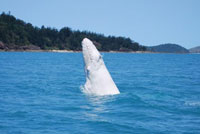
About 14,000 humpback whales migrated between Australia and Antarctica each year. Among them is a white humpback, nicknamed Migaloo. Migaloo, or “white fella” in an Aboriginal language, was first spotted in 1991 and may be the most popular humpback whale in the world, being the subject of several web sites (see also here and here) and having a Facebook page, (of course) as well as over a dozen Youtube videos. The last official sighting of Migaloo was by a cargo ship crew on August 10 about 10km north of Pipon Island in Far North Queensland, according to the White Whale Research Centre.
Migaloo, who is often referred to as the “only all white humpback whale,” seems to have lost that title ths week as a new white humpback calf has been sighted off Queensland, Australia. The white calf, believed to be just a few weeks old and as yet unnamed, was seen playing with a pod of dark humpbacks near Cid Harbour at the Whitsunday Island. There is no way to know whether the calf is related to Migaloo without DNA testing.
Thanks to Irwin Bryan for passing the story along.
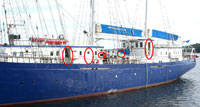
SV Concordia – Open Watertight Doors and Openings Highlighted in Red
We recently posted that Transportation Safety Board of Canada has concluded that poor training played a role in the knockdown and capsizing of SV Concordia. The official Marine Investigation Report examines the events leading up to the capsize in some detail. It is a fascinating report and well worth reading.
How did the ship sink? Contrary to earlier accounts, the Transportation Safety Board found no evidence of a microburst, a sudden and violent downdraft of wind that can reach speed as high as 150 knots. There may have been downdrafts present in the squalls, but nevertheless, the winds in which the ship capsized were no stronger than winds the ship had previously encountered.
Continue reading
Laura Dekker has celebrated her 16th birthday and has set sail from Darwin, Australia on a westerly course across the Indian Ocean bound for Africa. Given the concern about piracy in the Indian Ocean, her exact route is being kept secret. In 2009, teenage circumnavigator Zac Sunderland was shadowed by a boat which may have been pirates near the Cocos Keeling Islands, which may be along Ms. Dekker’s route. In 2010, Zac’s sister Abby Sunderland’s boat was knocked down and dismasted in the Indian Ocean ending her attempt at solo circumnavigation. Ms. Sunderland attempted to transit the Indian Ocean in mid-Winter whereas Ms. Dekker will be sailing in the southern hemisphere Spring.
Laura Dekker, 16, sets sail into piracy-plagued Indian Ocean
Thanks to Irwin Bryan for passing the story along.
In February 2010, the sail training ship Concordia sank off the coast of Brazil. At the time, the captain said that the ship was hit by a “microburst,” also known as a white squall, a violet storm which struck the ship so rapidily that there was no time to react. A report issued today by the Transportation Safety Board of Canada, however, blamed human error caused by poor training for the capsize and sinking of the ship.
Poor training standards to blame in SV Concordia sinking
Continue reading
Two hundred and fifty three years ago today, Horatio Nelson was born in in Burnham Thorpe, Norfolk, the sixth of eleven children. He went to sea at 12 on a ship commanded by a maternal uncle. He would become the greatest naval commander in British history, dying in 1805 at the battle of Trafalgar, his great victory, where the Royal Navy soundly defeated the combined fleets of the French and Spanish navies.
The Royal New Zealand Navy is also celebrating its 70th birthday. On October 1, 1941, the The New Zealand Division of the Royal Navy became the Royal New Zealand Navy. The 70th Anniversary celebrations will include a visit to Wellington by ten navy ships. Festivities start today and run through Monday. These will not be the only excitement in Wellington this weekend, however. The New Zealand All Blacks will be competing in a Rugby World Cup match against Canada. A Festival of Carnivale will also be taking place as will a “rural weekend” event including sheep shearing, sheep dog trials, sheep racing and wood chopping. Wow. A busy and eclectic weekend indeed.
Harold Hackett of Prince Edward Island started throwing bottles with messages inside into the Atlantic Ocean in 1996. Since then he has cast 4,800 bottles into the sea and has received 3,100 responses. He has received letters back from Africa, Russia, Holland, the UK, France, Scotland, Ireland, parts of New England, Florida, Norway and even the Bahamas. His response rate may be better than the average “Friend” request rate on Facebook. Click the link below for a BBC interview of Mr. Hackett.