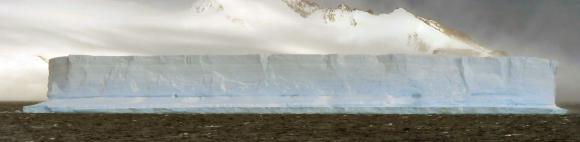
 In my new novel, The Shantyman, the clipper ship Alhambra nearly collides with a massive ice island. From Chapter Nine:
In the forenoon watch came the cry, “Ice, dead ahead.”
It was my watch below, but I jumped up with the rest and headed forward, expecting to see an iceberg. Instead, I only saw white. It took me a few minutes to realize that I was wasn’t staring at fog but at the white face of an ice cliff, the sheer side of a drifting island of ice, rising close to one hundred feet high. The massive floating island looked as tall as the masts and stretched out to port and starboard, disappearing into the fog on either hand. And we were sailing straight for it
The event in the novel was based on various accounts from clipper ship voyages from the 19th century. By using Matthew Fontaine Maury‘s Wind and Current Charts as well as his Sailing Directions, clipper ships of the day had been making faster passages around Cape Horn. Maury’s charts and sailing directions did, however, send the ships farther south, closer to the ice and icebergs. The clipper ship John Gilpin sank after hitting an iceberg in 1858 while just a year later, the clipper Fleetwood met the same fate. Numerous ships were also damaged by ice but made it to port. Every year, ships simply disappeared rounding Cape Horn, so it is unknown whether they hit ice or were overwhelmed by the seas.
 What should a ghost ship be made of? Why not water, wind and light? That is precisely what the designers at the Romanian Art collective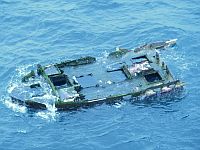
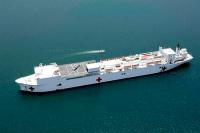 The hospital ship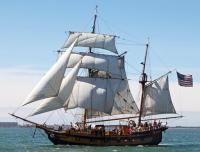
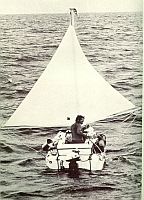
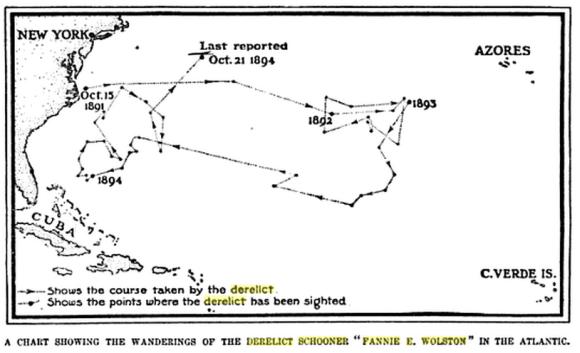 One of the more interesting questions about Louis Jordan’s ordeal is “why didn’t he drift farther north on the Gulf Stream?” Jordan was dismasted in his Alberg 35 sailboat, named Angel, somewhere off the North Carolina coast in January and drifted for 66 days until he was spotted by a German container ship roughly 200 miles east of the North Carolina shore. Jordan was somewhat north of where he entered the Atlantic but the primary direction that his boat drifted, dismasted and with a damaged rudder, was easterly. How is this possible?
 A
A 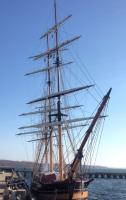 These days just about anything with a mast or two is called a “tall ship.” Some are and many are not. One ship that definitely qualifies is Rhode Island’s
  This would be funny, if it weren’t sad. Last week the German container ship,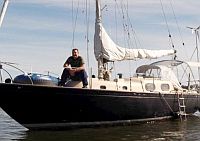
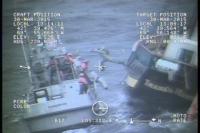 On Monday, the
 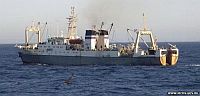 Dalniy Vostok