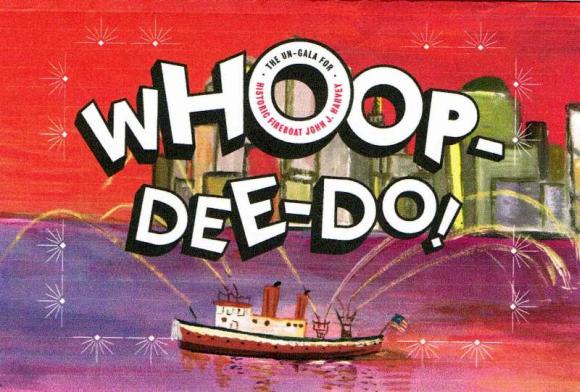
 What’s a Fireboat Whoop-Dee-Do? I am not entirely sure but it sounds like fun. It is a fundraiser for the historic fireboat John J Harvey on Monday, Mar. 16th, 6:00-9:00 at Tribeca 360, 10 Desbrosses Street, just south of Canal Street in Mahnhattan. It is described as “not your Granny’s gala! — An evening of foot-stomping music, spectacular views, cocktail hour, fabulous buffet dinner, and that special fireboat quirkiness… Bluegrass Music with an urban twist by the NYCitySlickers!” Click here to learn more and buy tickets.
 The US and Canadian Coast Guards have been working jointly to free the iconic Great Lakes bulk carrier, SS Arthur M. Anderson, stuck in the ice in Lake Erie near Conneaut Harbor. The laker had been bound for Sturgeon Bay, WI when it became stuck in ice which can be six to ten feet thick in ice ridges formed by the wind. The ship has been stuck for the last five days. The crew of 10 aboard is said to have ample fuel and food. The US Coast Guard 140′ icebreaking tug Bristol Bay has been unable to reach the ship and is awaiting assistance from the Canadian Coast Guard Ship Griffon, a 234-foot multi-mission medium icebreaker.
SS Arthur M. Anderson is a 767 ft long, Great Lakes self-unloader built in 1952. She is known as the last ship to make contact with the ill-fated SS Edmund Fitzgerald before she sank in a November storm in 1975 with the loss of all 29 crew aboard. Thanks to Phil Leon for contributing to this post.
Photo: Jack Guez, AFP/GETTY
Six sport divers from a local club were scuba diving in the ancient Roman harbor of Caesarea in Israel, when one of them spotted a small tiny coin, which the diver thought looked like a toy coin from a game of some sort. On further examination, the coin turned out to be gold. Then the divers found another and then another. Later using a metal detector, they found a cache of 2,000 gold coins of various dimensions and weights. The gold coins, most dating from the Fatimid caliphate that ruled much of the Mediterranean from A.D. 909 to 1171, are the largest treasure of gold coins ever discovered in Israel.
As reported by National Geographic: At its height in the mid-tenth to mid-eleventh centuries A.D., Fatimid rule stretched across North Africa and Sicily to the Levant, with trade ties that extended all the way to China. From its capital in Cairo, the caliphate controlled access to gold from sources in West Africa to the Mediterranean, and the currency crafted from the precious metal conveyed the Fatimids’ formidable power and wealth.
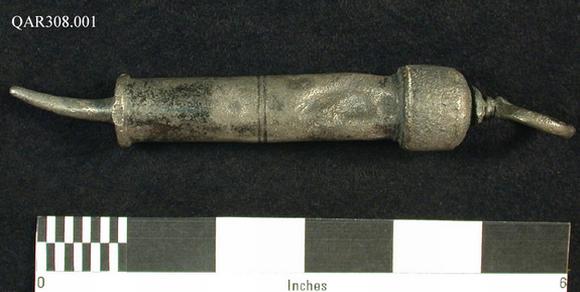
Urethral syringe used to treat syphilis
Sometimes the way the media reports a story about nautical history can be almost as interesting as the story itself. Near the end of last month, archaeologists examining artifacts discovered on the wreck of the pirate Blackbeard’s flag ship, the Queen Anne’s Revenge, announced that they had found medical equipment including a urethral syringe, probably used for the treatment of syphilis, several enema pumps, a porringer used in bloodletting, as well as variety of devices used in preparing and storing medicine. While this discovery is very interesting. It is not surprising. When the pirate Edward Teach, better known as Blackbeard, captured the French slave ship, La Concorde, in 1717, he renamed the ship Queen Anne’s Revenge, and used her as his flagship. Blackbeard let most of the French crew go, but forced the ship’s three surgeons to stay. It is probably their equipment which was recently discovered.
 A recent article in Atlantic Monthly pointed out that Apple, the technology company, not the fruit, is now, in economic terms, the size of a small country. The world’s largest company with a market capitalization of $700 billion, it is now issuing bonds in Switzerland. As noted in the article: “Apple has the financial influence of a not-even-that-small country at this point. The company’s $178 billion—$178 billion!—puts it on par with the gross domestic product of a country like New Zealand, surpassing the GDPs of Vietnam, Morocco, and Ecuador, according to the most recent World Bank data. If Apple were a country, it’d be the 55th richest country in the world.”
Microsoft, at its peak in 1999, was slightly larger than Apple is today, in current dollars, but now has roughly half the market capitalization. Yet, neither of these modern giants can compare with the Dutch East India Company, the VOC, founded in 1602.
In the east side of New York harbor, the New York State side, the lowly oyster is a hero. Not only will restored oyster beds help filter and clean the water of the harbor, they could also play a critical role in limiting damage from hurricanes. After Hurricane Sandy, oysters have become part of the the disaster mitigation plans for future hurricanes.
On the New Jersey side of the harbor, however, the oyster remains an outlaw, a dangerous criminal to be routed out. New Jersey bans the restoration of oyster beds in polluted waters, such as New York harbor, based on the theory that an oyster smuggler might steal from the new oyster beds, sell the oysters and that consumers could be made sick by the oysters from polluted waters. This apparently is not a concern on the New York side of the harbor. The oysters in the new beds are not nearing commercial size in any case. So, on one side of the harbor, the oyster is praised for helping to clean polluted water and on the other it is banned because the water is polluted. Madness, indeed.
New Jersey’s oyster madness: Reefs rise in NY while N.J. ban continues
The weather is bitterly cold here on the west bank of the Hudson River, so it seems like as good a time as any to look toward the warmer waters of the Antipodes. A video from the Spirit of Adventure Trust of New Zealand shot aboard the barquentine Spirit of New Zealand.
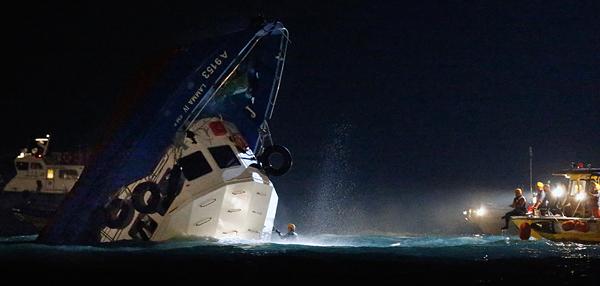
Photo: Kin Cheung/Associated Press
In 2012, we posted about the collision between the passenger ferry Sea Smooth and the ferry Lamma IV off Hong Kong near Lama Island. The collision killed 39, all passengers on the Lamma IV . The Lamma IV was carrying staff and family members of the Hongkong Electric Company to watch fireworks in the city’s Victoria Harbour to celebrate China’s National Day and mid-autumn festival. It was the deadliest maritime disaster in Hong Kong since 1971.
Today, the captain of the ferry Sea Smooth, Lai Sai-ming, was sentenced to eight years in prison after being found guilty of 39 counts of manslaughter. The captain of the Lamma IV, Chow Chi-wai, was acquitted on Saturday of manslaughter but found guilty of the endangering the safety of others at sea and was sentenced to nine months in prison.
Hong Kong Ferry Captain Sentenced to 8 Years in Prison for Deadly Collision
It is currently around 18 degrees F on the west bank of the Hudson River, but with the wind chill the figures are somewhere in the negative numbers. It seems appropriate, therefore, to post this wonderful video, shot by an X-Factor Aerial drone. The footage is from about 50 miles north of New York City and features some great views of the ruins of Bannerman’s Castle on Pollepel Island. The “castle” was once a military surplus warehouse. The video also have great shots a Coast Guard cutter on the ice choked river.
Frozen Beauty – A winter morning on the Hudson River – FEB 2015 from XFactor Aerial on Vimeo.
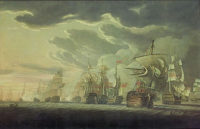
The Battle of Cape St Vincent, 14 February 1797
by Robert Cleveley
Happy Valentine’s Day! The day is named for one of several martyrs named Valentine. Valentine of Rome and Valentine of Terni both have feast days on February 14th. The day is also associated with an old Roman fertility festival Lupercalia. February 14th is also an auspicious day in nautical history.
On February 14, 1797, in the Battle of Cape St. Vincent, 15 British ships of the line defeated 27 Spanish ships, earning Admiral Sir John Jervis the title of Earl St Vincent. Captain Horatio Nelson was knighted as a member of the Order of the Bath for his notable valor in capturing two Spanish ships by boarding.
February 14, 1779, was less happy for the great explorer, Captain James Cook, who was killed in a disagreement over a stolen boat in Kealakekua Bay, Hawaii.
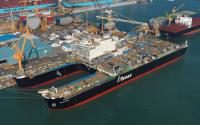 Edward Heerema, the president of Swiss-based Allseas Group S.A., had decided to name their newest and largest ship, Pieter Schelte, after his father, Pieter Schelte Heerema, who was an accomplished marine engineer. Unfortunately, that is not the only thing that his father is remembered for. During World War II, Pieter Schelte Heerema served as a Dutch officer in the Nazi Waffen SS. The naming of the ship after a Nazi officer was controversial from the day it was announced. Allseas essentially ignored the protests from Jewish groups and from the shipping labor unions. When Royal Dutch Shell, which has hired the ship to decommission offshore rigs, complained, however, Allseas payed attention. The ship has been re-named the Pioneering Spirit.
All of the controversy surrounding the name of the ship has distracted from the appreciation of size of the new ship, which may be the largest ship ever built, with a gross tonnage of 403,342 GT, a breadth of 123.75 m/406 ft and a full load displacement of 900,000 metric tons. The ship is a dynamically positioned catamaran designed to install or decommission offshore platforms and to lay pipe. Shell’s Prelude floating liquefied natural gas platform is longer but far narrower than the Pioneering Spirit and has a displacement of around 600,000 metric tonnes.
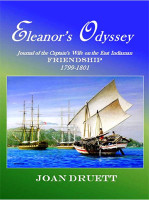 In 1799, Eleanor Reid was only 21 and newly married to Captain Hugh Reid, commander of the Honorable East India Company extra ship Friendship. It was her husband’s first command and he was under orders to carry a cargo of Irish convicts, the result of an Irish uprising the year before, to New South Wales. French privateers prowled the seas. The East Indies charts were rudimentary, at best, not to mention all the other perils of the sea. Nevertheless, Eleanor would join her husband on the voyage. Not only was Eleanor rather fearless, but she was also a keen observer of the life aboard ship and of the cultures of the myriad islands and ports on a voyage that will continue beyond New South Wales, through the East Indies archipelago and on to India.
Eleanor’s Odyssey: Journal of the Captain’s Wife on the East Indiaman Friendship 1799-1801 is a fascinating voyage, alternating between excerpts from Eleanor’s journal’s, and insightful and entertaining commentary by Joan Druett. Continue reading
 After a 19 month trial, Captain Francesco Schettino has been found guilty of manslaughter associated with the grounding and sinking of the Costa Concordia in 2012 in which 32 passengers and crew died. Another 150 passengers and crew were injured. Schettino was sentenced to 16 years and one month in prison. The verdict is expected to be appealed.
In 2103, Costa Line’s cabin service director, the Costa Concordia‘s first officer, third officer and the ship’s helmsman were all convicted on various charges under a plea bargain deal in which none has served prison time. Lawyers for the plaintiffs’ lawyers were pleased with Schettino’s conviction, but have complained to the court that no one from the cruise company’s upper management was ever charged with a crime.
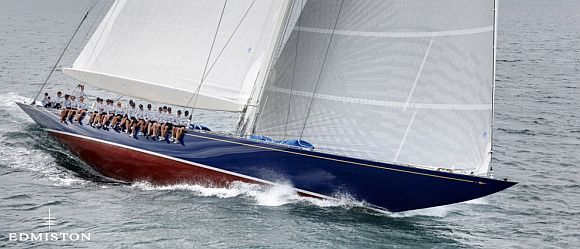 I recently saw an ad titled, “Endeavour Yacht for Sale,” from a high-end yacht broker. It caught my attention because I owned, sailed and lived aboard an Endeavour 32 sloop, a few decades ago. It seemed unlikely, however, that the yachtbroker was peddling a classic plastic sailboat from the mid-70s. And I was right. The yacht being advertised was not an Endeavour yacht, but the yacht Endeavour, the J boat, built and sailed by Thomas Sopwith, which came close to winning the America’s Cup in 1934. The Endeavour is being offered for €19,950,000, or approximately $22,596,000. This is all rather remarkable given that the yacht was once sold for ten pounds. The yacht Endeavour has an amazing history starting with an aircraft manufacturer, moving on to an America’s Cup challenge, an appearance at Dunkirk, a near scrapping, a sinking, a rescue by the “Queen of the J class,” ownership by a corporate felon and then by a mysterious investor from Hawaii.
 Award winning author Joan Druett recently interviewed V.E. Ulett, author of the Blackwell’s Adventure series, on her World of the Written Word blog. Reposted with permission.
The author of the rousing historical Blackwell series kindly consented to allow me to schedule an interview, to coincide with the launch of the print edition of her latest, Blackwell’s Homecoming.
J.D. What is the source of your intense interest in early nineteenth century history? Books, films, stories told in your childhood?
V.E.U. Books, books are kind of my thing. As an impressionable adolescent I read all the great nineteenth century novelists; Austen, Dickens, Thackeray, Trollope. That milieu, the social order, gender and class relationships, are deeply interesting to me. I hope I’m not a snob in my reading tastes though. I read across all genres and in all formats: ebooks, print books, audio books.