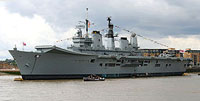
 The Royal Navy aircraft carrier HMS Invincible was sold to Turkish scrappers last February. Now bids are open for the sale of HMS Ark Royal. While scrapping seems a likely outcome the tender allows that “alternatively the vessel may be purchased for re-use/refurbishment for non-warlike purposes.” Now Shiptalk has word that a Devon based diver is bidding to sink the ship as an artificial reef off Torbay to promote sea life and provide a dive site for recreational divers.
In addition to the bid to sink the ship, “plan[s] to use the Ark Royal as a floating commercial helipad in London. Other proposals include turning it into a school, a nightclub or a base for security personnel during the Olympics.”
All bids are due by 1000 BST on June 13th.
 June 8th is officially
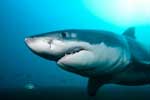 And speaking of “music of the sea”, an intriguing story from Australia. When Matt Waller, a tour operator in Neptune Bay, Australia, attached speakers to shark cages and played the heavy metal band AC/DC, he discovered that the great white sharks became less aggressive and more inquisitive, which is odd because AC/DC seems to have exactly the opposite effect on human teenagers.
 Traditionally, ships in port use auxiliary generators to power shipboard electrical systems. APL, the Singapore based container lines, is now going “cold-iron,” shutting down the auxiliary generators on their ships docking when calling on Oakland, California and using shore power instead to meet the their electrical needs. They expect to reduce emissions by 50,000 pounds of nitrogen oxides and 1,5000 pounds of particulates from its ships annually in Oakland. The State of California has mandated cold-ironing for container ships by 2014. APL is several years ahead of schedule.
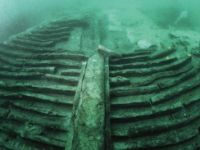 Archeologists cannot say for sure what the lead pipe which penetrates the hull of a nearly 2,000 years old wreck of a Roman ship off the town of Grado in Italy was used for. Some think that it was a supply line to an onboard tank which carried live fish to market. If so, the approximately 55′ ship may have carried on one the earliest onboard fish tanks.
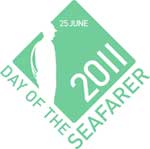 June 25th of this year is being celebrated as the “
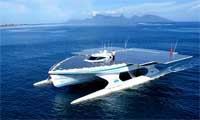 The 31-meter Turanor, a catamaran yacht fitted with 536 square meters of photovoltaic panels, has successfully sailed halfway around the world, from Monaco to Brisbane, Australia, powered solely by the sun. The Turanor‘s captain and crew are half way toward completing their goal of piloting the first solar powered vessel to circumnavigate the world.
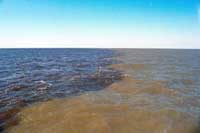 ead zones are areas where there is too little oxygen in the water to support fish and other aquatic life. They are usually caused by fertilizers and/or other organic materials causing algae blooms which deplete the oxygen in the water. Dead zones in the Gulf of Mexico from the run-off from fertilizers and chemicals flowing into the Mississippi have been forming yearly since the 1970s. Now there is serious concern about the impact this year’s flood in the Midwest may have on the waters of the Gulf.
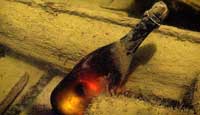 Last July