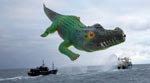
 The Sea Shepherd farce continues. The ex-captain of the Ady Gil cut through anti-boarding nets to board a Japanese whaler and was immediately arrested. In related news, Sea Shepherd crew onboard the Steve Irwin, a vessel named for the television host of the show “Crocodile Hunter,” are now throwing fake crocodile eggs at the Japanese whalers.
Paul Bethune, the captain of the speed boat Ady Gil who managed to get the boat run down by a Japanese whaler, jumped aboard the Japanese whaling ship Shonan Maru 2 from a jet ski on Monday, “with the stated goal of making a citizen’s arrest of the ship’s captain and presenting him with a $3 million bill for the destruction of a protest ship last month. As reported by the Associated Press, Bethune was immediately arrested himself.
Continue reading
 Here is an intriguing article suggesting that we humans have been taking to the sea for far longer than had been previously recorded. Recently stone tools have been found on the island of Crete which date back at least 130,000 years and may be much older. As Crete has been an island for more than five million years, this suggests that those who carried the tools to the island were very ancient mariners indeed. Thanks to John for passing the article along.
 An interesting perspective from the The
  Strange but true. Digital memory cards are indeed an amazing technology.
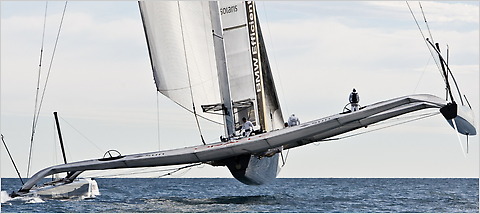
 As truly awe inspiring as the huge and high tech America’s Cup boats are, we shouldn’t forget that iceboats are the real speed demons on the water (even if it is frozen.) Will at the Tugster blog has some
 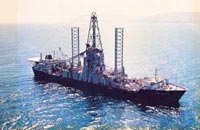 Over thirty years ago when I was in college studying naval architecture, a classmate of mine got a summer job working as a naval architect for Sun Shipyard helping to design some part of the new deep sea mining ship, the Hughes Glomar Explorer, being built for Howard Hughes’ Global Marine. Years later my friend was chagrined to learn that the ship he was working on was not intended for deep water mining but was a top secret CIA project to raise the K-129, a sunken Golf Class Soviet submarine. The cover story was that the ship was intended to raise magnesium nodules from the deep ocean floor.
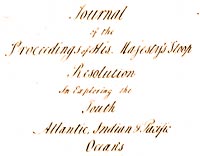 Last October, we wrote about how researchers are using eighteenth century Royal Navy ship logs to study climate change. (See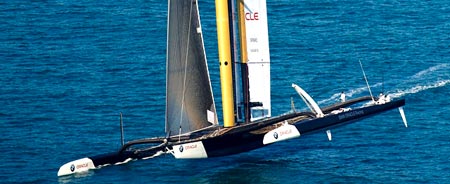
 The physics here is fascinating. How is it possible that the America’s Cup challenger ”USA” can sail at 22 knots in only two knots of wind?
 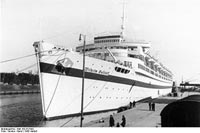 Many ships carrying civilians were sunk during World War II by both sides. If current estimates are correct, the torpedoing of the
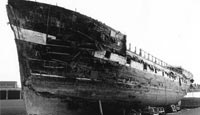 The
The