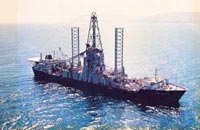
 Over thirty years ago when I was in college studying naval architecture, a classmate of mine got a summer job working as a naval architect for Sun Shipyard helping to design some part of the new deep sea mining ship, the Hughes Glomar Explorer, being built for Howard Hughes’ Global Marine. Years later my friend was chagrined to learn that the ship he was working on was not intended for deep water mining but was a top secret CIA project to raise the K-129, a sunken Golf Class Soviet submarine. The cover story was that the ship was intended to raise magnesium nodules from the deep ocean floor.
For the first time the CIA has declassified documents which officially describes Project Azorian and the raising of of the K-129.
Project Azorian – The CIA’s Declassified History of the Glomar Explorer
Continue reading
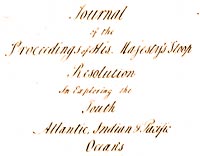 Last October, we wrote about how researchers are using eighteenth century Royal Navy ship logs to study climate change. (See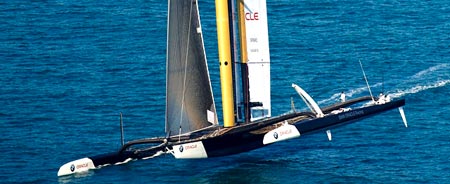
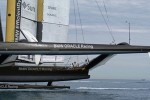 The physics here is fascinating. How is it possible that the America’s Cup challenger ”USA” can sail at 22 knots in only two knots of wind?
 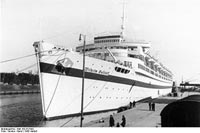 Many ships carrying civilians were sunk during World War II by both sides. If current estimates are correct, the torpedoing of the
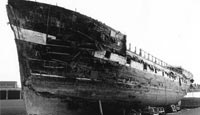 The
The 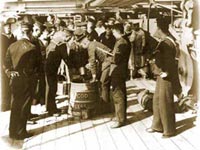
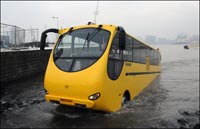 This September, we posted about the popular and nearly ubiquitous “duck tours” using refurbished World War II DUKW amphibious trucks, or vehicles inspired by them, to take tourists on tours in cities and resorts around the world. (See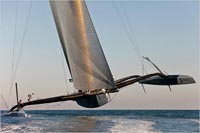
 Abby Sunderland is putting into Cabo San Lucas, Mexico, interrupting her round the world attempt, because of a power problem aboard her yacht, Wild Eyes. The yacht’s solar panels and wind generators were not providing enough power and the yacht will be fitted with additional battery capacity.
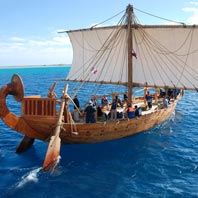 In January we posted about the
 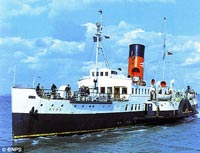 Not every historic vessel can be saved and not every historic vessel should be saved. The difficult question is deciding which are worthy of saving before they fall prey to the ravages of time or, in this case, the bureaucracy. A story from today’s