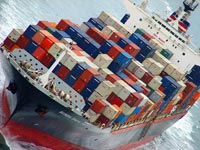
 Containership operations has always been like riding a roller coaster, with many highs and lows and unexpected twists and turns. One sign of this is the fluctuating speeds of container ships over the years, going from slow to fast to slow to fast to and now to slow, once again.
Slow Trip Across Sea Aids Profit and Environment
Many consider the Ideal X, a converted T2 tanker owned by Malcom McLean, which carried 58 containers in 1956, to be the first containership. The Ideal X had a top speed of around 15 knots. In 1972, McLean had built eight of the largest containerships in the world at the time, the magnificent SL-7s. They could carry 1,000 containers at 33 knots. They were indeed the clipper ships of the containership age and they steamed straight into the oil crisis of 1973, where oil prices tripled and continued to rise. The SL-7s were ultimately sold to the US Navy for conversion to Fast Sealift Ships.
Continue reading →


 The
The  The
The Nuclear power as a propulsion system for merchant ships was the future that never arrived. The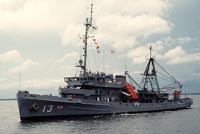
 Does politics make for strange shipmates?
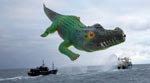 The Sea Shepherd farce continues. The ex-captain of the Ady Gil cut through anti-boarding nets to board a Japanese whaler and was immediately arrested. In related news, Sea Shepherd crew onboard the Steve Irwin, a vessel named for the television host of the show “Crocodile Hunter,” are now throwing fake crocodile eggs at the Japanese whalers.
 Here is an intriguing article suggesting that we humans have been taking to the sea for far longer than had been previously recorded. Recently stone tools have been found on the island of Crete which date back at least 130,000 years and may be much older. As Crete has been an island for more than five million years, this suggests that those who carried the tools to the island were very ancient mariners indeed. Thanks to John for passing the article along.
 An interesting perspective from the The
  Strange but true. Digital memory cards are indeed an amazing technology.
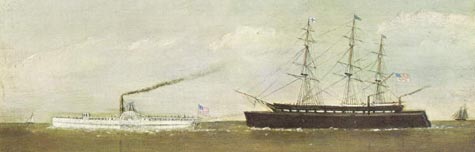
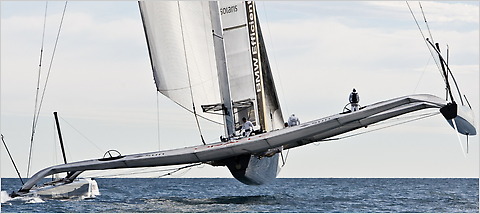
 As truly awe inspiring as the huge and high tech America’s Cup boats are, we shouldn’t forget that iceboats are the real speed demons on the water (even if it is frozen.) Will at the Tugster blog has some