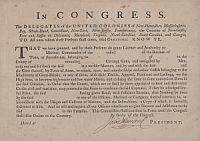
Letter of Marque, Click to see more
Two hundred and forty years ago today, the Continental Congress authorized the commissioning of privateers to attack British ships. It was still three months before the Declaration of Independence from Great Britain. The legislation was in many respects simply catching up with what was already going on in New England and elsewhere along the coast. A year earlier, in the spring of 1775, the colony of Massachusetts had begun commissioning privateers. Likewise, General Washington began chartering schooners to act as commerce raiders to help supply his army surrounding Boston.
Over the course of the war, about 1,700 Letters of Marque and Reprisal, which is to say, privateering commissions, were granted to nearly 800 privateering vessels, which captured or destroyed about 600 British ships. By comparison, the Continental Navy never numbered more than 70 vessels and captured fewer than 200 British ships.

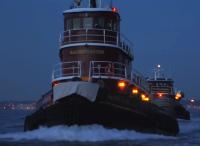 When I arrived in New York back in the mid-70s, a vast fleet of tugs swarmed across the harbor like so many water beetles. Most kept busy assisting ships in docking. Now there are fewer but larger ships, many with bow thrusters, so fewer tugs are needed to get them to their berths.
 In early May,
  British archeologists have located the wrecks of two
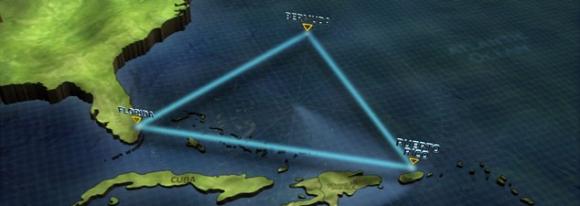 The Bermuda Triangle nonsense continues, as does the media’s fondness for dramatic headlines, whether or not there are any facts to support them. The most recent silliness is about late ice age methane explosions. The UK’s Daily Mail headline reads: “
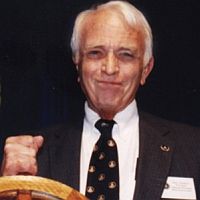 Peter Stanford, an icon of maritime historical preservation in the United States, died yesterday at the age of 89. In 1967, Peter and his wife Norma founded the
 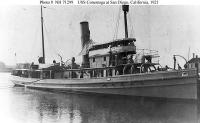 On March 25th, 1921, the US Navy ocean-going tug,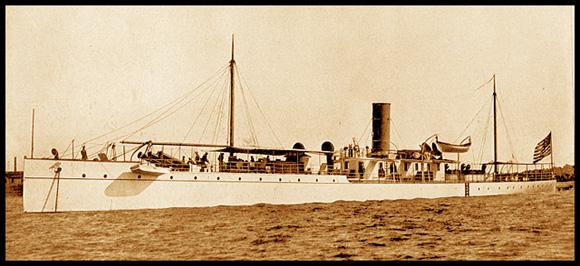
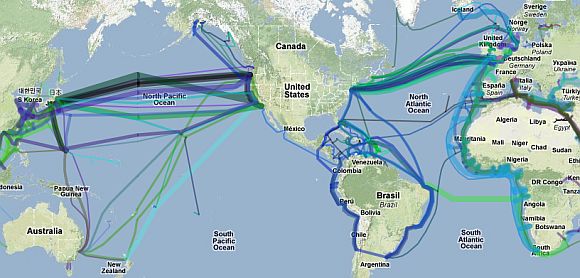 In describing the internet, people often talk of “the cloud.” We connect through over an ethernet, where ether is an archaic term from the Latin aethēr meaning “the upper pure, bright air.” But as they say in Brooklyn, fuhgeddaboutit! Most of the internet is beneath the sea carried by submarine communications cables.
  The
The