If HMS Hermione, commissioned in 1783, became a symbol of Royal Navy cruelty and bloody mutiny, the French light frigate l’ Hermione, commissioned in 1779, would become a symbol of American independence. On March 21, 1780, the 23 year old Gilbert du Motier, better known as the Marquis de Lafayette, stepped aboard l’ Hermione to sail back to America with the then secret news that France was committing 5,500 men and five frigates to help George Washington and his forces. With this new French aid and the assistance of the young Major General Lafayette, the Continental forces under General Washington would defeat the British General Cornwallis at Yorktown eighteen months later, effectively winning independence from Great Britain.
Now l’ Hermione, “freedom’s frigate,” has been reborn in the Charente-Maritime in Rochefort, France where the original ship was built. The new frigate has been under construction since 1997 and preparations are now being made for its launch. More than three million visitors have watched the construction of the replica frigate. When completed, there are plans to sail the ship to Boston, reenacting the fateful voyage carrying the Marquis de Lafayette. The video below is a light-hearted tour and inspection of the new frigate nearing completion.
Hermione
[iframe: width=”560″ height=”315″ src=”http://www.youtube.com/embed/tdNwZwkxk8E” frameborder=”0″ allowfullscreen]
Thanks to Frank Hanavan and Alaric Bond for pointing out l’ Hermione.
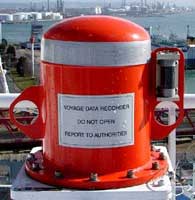 What really happened on the Costa Concordia in the final hours leading up to and following her grounding and sinking off Giglio on January 13, 2012? The first step in definitively answering that question began in early March when an Italian judge directed court appointed experts to examine the ship’s voyage data recorder, the so called “black box.” The examination is expected to take 90 days, so the first results will be presented to the court sometime in early May.
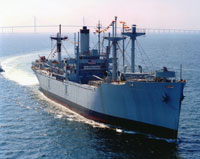 The waters around Tampa Bay may appear to step back in time tomorrow as the World War II Victory ship
 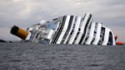 Divers have found five more bodies in the wreckage of the
 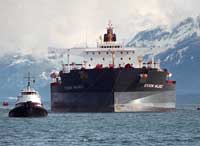 The twenty eight year old bulk carrier
 We
We 
 Alan Villiers