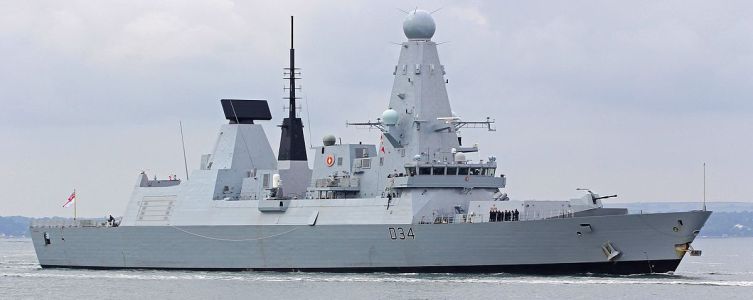
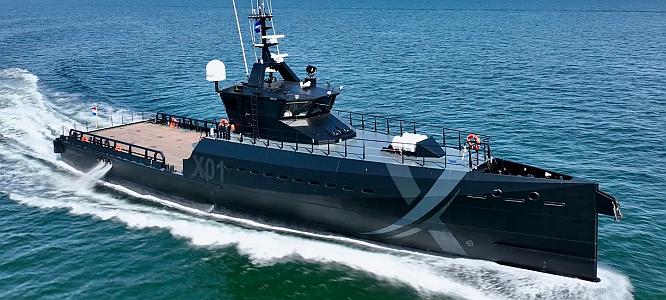
 Last year we posted about the christening of the Royal Navy’s research ship XV Patrick Blacket. (The “XV” designation refers to “experimental vessel.”) The 42-meter, 270 tonne modified crew-supply ship is intended to be a platform on which to test new technology without the need to place demands on other navy ships, many of which are deployed permanently away from UK waters.
The Royal Navy is now collaborating with the Imperial College London to test a quantum navigation system onboard the XV Patrick Blacket. The heart of the system is a newly developed quantum accelerometer capable of determining position without the use of GPS.
 Recent videos of a sea drone attack on a Russian warship released by Russia’s Defence Ministry and by Ukraine’s public broadcaster Suspilne tell two very different stories of the encounter.
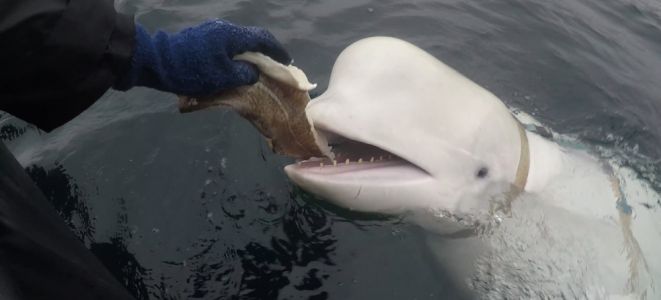 In 2019, we
 An updated repost on
 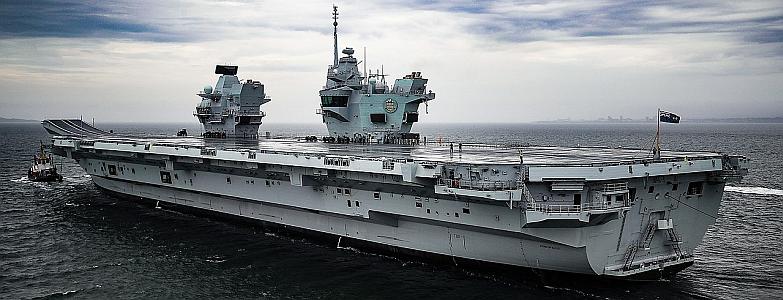 We now have the answer why the Royal Navy’s newest aircraft carrier,
 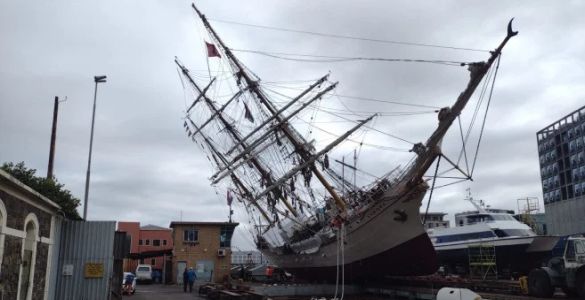 The 112-year-old steel-hulled
 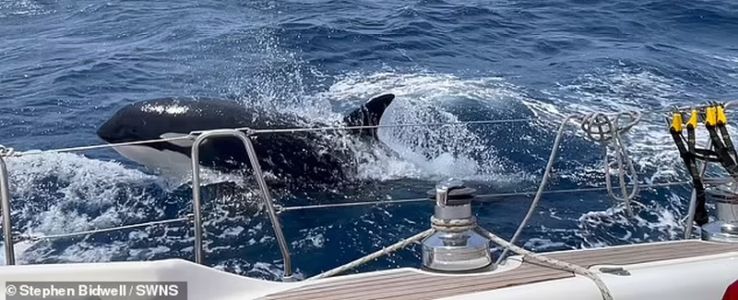 Orca attacks on sailboats off the Strait of Gibraltar and the Iberian Peninsula continue.
 The
The 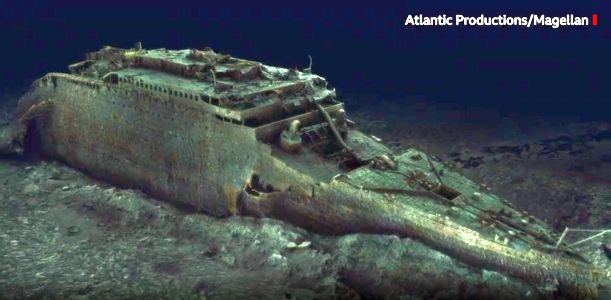 The
The  An updated repost appropriate for Mother’s Day.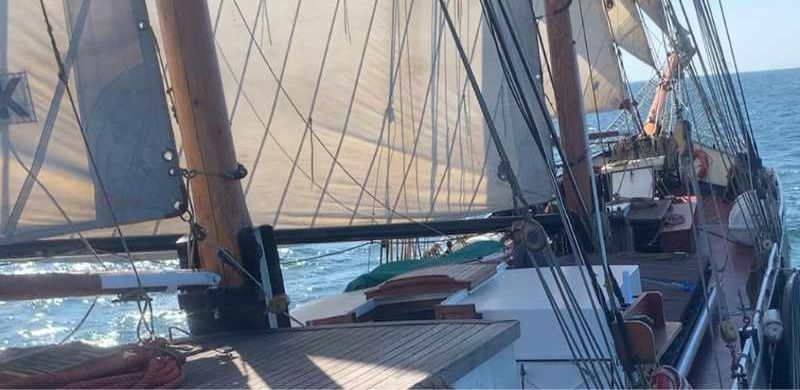
 The three-masted, gaff-rigged Chesapeake ram schooner
 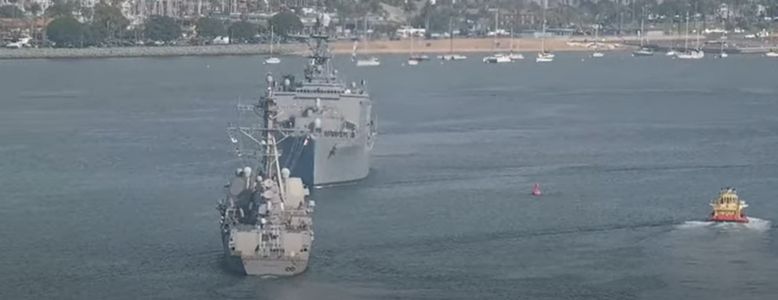 In late November of last year, the guided-missile destroyer, USS Momsen, and the dock-landing ship, USS Harpers Ferry, were moving in opposite directions in San Diego Bay when they came close to colliding. The two ships came within 35 yards of each other but were able to avert disaster through some last-minute maneuvering.