
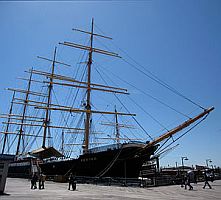
Peking before downrigging
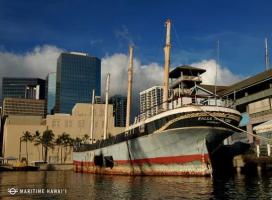
I heard this morning that the heavy lift ship Combi Dock III has entered New York harbor. (Thanks Daniel Pine for the heads-up.) The ship is reported to be the heavy-lift chartered to carry the windjammer Peking back to her home port of Hamburg for restoration.
The German newspaper Hamburger Abendblatt recently reported: According to the current timetable, the dock ship “Combi-Dock III” will arrive in New York on July 12, so the trip could start on July 17th.
In the next three days they will be working on the Caddell shipyard in front of Staten Island. The anchor and two approximately 20-meter-long original yards have to be tied to the deck for the crossing and the lines to which the “Peking” is towed from the port.
The article goes on to say that the arrival and refloating of the ship in Hamburg is expected to be around July 31st.
 This year’s
 Originally posted on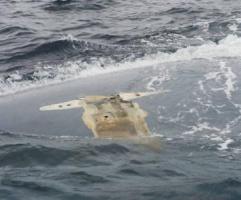

 A post from five years ago, which is still fitting for the day.
 A guest post by Susan Yamamoto from her new and wonderful blog,
  now and then, the stories of sea monsters take a physical form when a huge, decaying carcass of what appears to be a monster from the deep washes ashore. Such a creature came ashore on Seram Island in Indonesia’s Maluku province in May. Initially,