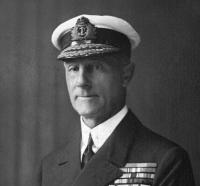
Admiral John Jellicoe
The Battle of Jutland, which was fought 100 years ago today, was one of the greatest modern sea battles and arguably, changed the course of World War I. In the battle, 250 ships, manned by 10,000 sailors fought for 12 hours. The battle was fought between the British Royal Navy’s Grand Fleet under Admiral Sir John Jellicoe, against the Imperial German Navy’s High Seas Fleet under Vice-Admiral Reinhard Scheer in the North Sea, near the coast of Denmark’s Jutland Peninsula. After the battle, both sides claimed victory. The British lost more ships and men than the Germans, who claimed a tactical victory. The battle was, however, a clear strategic defeat for Germany, proving that the Imperial German Navy could not defeat the Royal Navy nor lift the naval blockade that was slowly starving Germany.
While the British are generally acknowledged as victors of the battle, there remains considerable controversy over the naval commanders, particularly the role played by Admiral Jellicoe. Some have claimed that if Admiral Jellicoe had acted more aggressively that he might have cut off the German navy before it could flee back to port. Others argue that Jellicoe acted prudently from a position of strength.
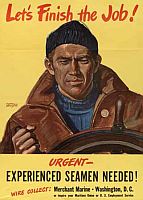 What was the most dangerous service in World War II? The Army, the Navy, the Marines?
 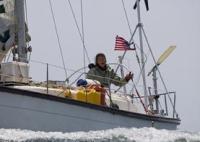 A few days ago, Donna Lange returned home to Narragansett Bay after completing her second solo circumnavigation on Inspired Insanity, her Southern Cross 28. An event was held in her honor at the Herreshoff Museum in Bristol, RI for family and friends to welcome her home.
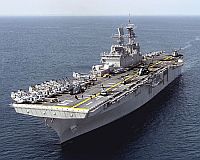 Yesterday thousands lined the shores of the Hudson to watch the
 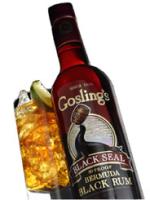 May 24th was not only the
 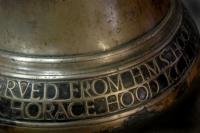 On May 24, 1941, the battlecruiser
  Starting Wednesday this week, the fleet will be in town, well part of it anyway, to celebrate the 28th observance of
 The website for the
 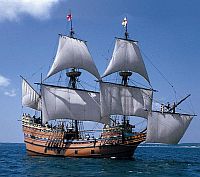 Mystic Seaport
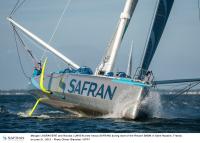 In December,
  Last week we made a post with the headline,