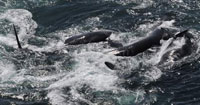
Photo: Cape Cod Times/Steve Heaslip
I recall many years ago how excited the guide was on a whale watching trip out of Provincetown when we sighted a mother right whale and her calf not long after leaving the dock. I can only imagine how researchers are reacting to the arrival of an unprecidented number of right whales in Cape Cod Bay near Provincetown. During a seven-hour research flight, 100 right whales were observed today. Northern Right whales are highly endangered. Only an estimated 450 North Right whales are known to exist, and yet almost a quarter of them have shown up to the party off Cape Cod. Scientists say that the whales were probably attracted by an unusually large and long lasting plankton bloom in the bay. The whales feed on the surface and have been sighted from shore from beaches at Truro, Herring Cove and Race Point in Provincetown.
Record number of right whales in Cape waters
Endangered whales gather in unprecedented numbers

 Douglas Faulkner, who died recently, had a varied and highly accomplished career as a naval and marine architect. He was involved in the design and testing of the first British nuclear submarine,
 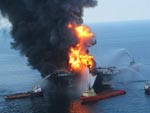 There appears to be both good and bad news exactly one year after the explosion and fire that sank the drilling rig
  The MV Asphalt Venture was hijacked by Somali pirates on September 28, 2010. After negotiating and being paid a multi-million dollar ransom, the pirates released the ship and part of the crew yesterday, but continued to hold seven Indian seafarers hostage, reportedly in retaliation for the arrest of Somali pirates by the Indian Navy in recent weeks. ‘It is a major shift in the pirate-hostage equation which will need to be considered and addressed by the international community,’ said general secretary Abdulgani Y. Serang of the National Union of Seafarers of India (NUSI).
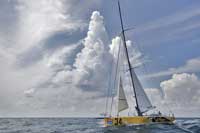
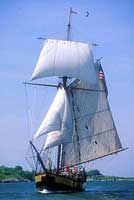 Great news. The Sloop Providence, replica of the American Revolutionary sloop of the same name is sailing again after being laid up for 3 1/2 years. She was purchased last year from the City of Providence by boat builder and captain Thorpe Leeson. The current Sloop Providence dates back to 1976 and has been used in two of the ‘Pirates of the Caribbean’ movies. Over the weekends she was sailed from Providence to Newport, Rhode Island and was open for tours on Sunday at Bowen’s Wharf. The new owners plan to employ the sloop on charters and educational missions.
 Oopps. In what is being described as a “school-boy error” the British Ministry of Defence posted a report on-line which revealed secret information about the UK’s nuclear powered submarines. The sensitive material was “redacted” by turning the background black, so that the text was not readable. The text was not removed, however, so that anyone who cut and pasted the text to another document could read, copy or distribute the “secret” information. The MOD was unaware of the breach until it was pointed out by a journalist.
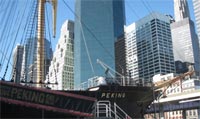 New York and Philadelphia are major ports and centers of art and culture. By all rights both should be home for major and successful seaport museums. Sadly that is not the case.
 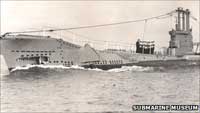 Sixty years ago today, the Royal Navy submarine