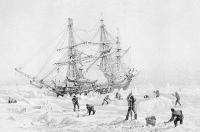
HMS Terror trapped in the ice
In an interesting historical coincidence, just days after the luxury cruise ship, Crystal Serenity, completed a passage through the Canadian Arctic’s Northwest Passage, HMS Terror has been found. HMS Terror is the second of two ships from Sir John Franklin’s ill-fated expedition to traverse the Northwest Passage. The ship sank after being abandoned in the Arctic ice 168 years ago. The wreck of HMS Terror was found on September 3, appropriately enough, in Terror Bay, which is located on the southwest shore of King William Island, in Nunavut. The wreck lies lies 60 miles (96km) south of where experts have long believed the ship was crushed by ice.
The discovery was tied to to local knowledge. The Week reports: An Inuk crewman on the team’s research ship, Sammy Kogvik, 49, was talking with the Arctic Research Foundation’s operations director, Adrian Schimnowski, when he recalled a hunting trip in Terror Bay, where he posed for a picture with a large piece of wood sticking out of the sea ice, which resembled a mast. When Kogvik got home and discovered his camera gone, he decided not to speak of the experience, believing the missing camera was an omen of the bad spirits that wander the island. But by following Kogvik’s tip, the researchers focused on the north end of Victoria Strait, eventually making their fateful discovery.
Continue reading →
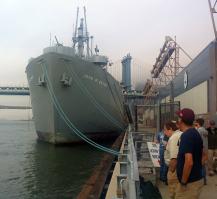 Last Sunday, I had the opportunity to spend a little time in the engine room of the
  Some people choose to celebrate today as “
 In 2009, we
 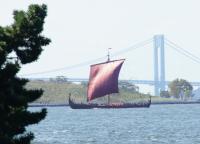 Today, the largest Viking longship built in modern times,
 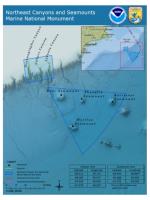 President Obama has designated 4,913 square miles of ocean, 130 miles off Cape Cod on the southern edge of George’s Bank, as the
 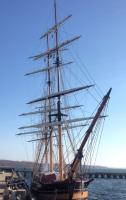 This summer, the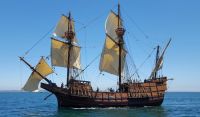
 If you are around New York harbor this Thursday, September 15th, the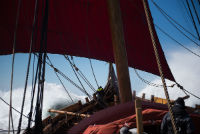
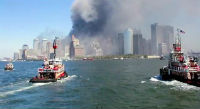 There is a line from a Paul Simon song, “these are the days of miracle and wonder.” One might not think to apply that lyric to the events of 9/11, fifteen years ago today, and yet for at least part of that strange and horrible day, they fit. The great